
Around AD 180, Irenaeus, bishop of Lyon, wrote five books against the Gnostics. As a young man he had listened to Polycarp, who had known the apostle John. These were teachers inside and around the churches who claimed a higher knowledge, gnōsis, than the faith ordinary Christians had received. The Valentinians were the ones he knew best. Their system, he wrote, was one “which neither the prophets announced, nor the Lord taught, nor the apostles delivered, but of which they boast that beyond all others they have a perfect knowledge” (Against Heresies, Book I, Chapter 8 ↗).
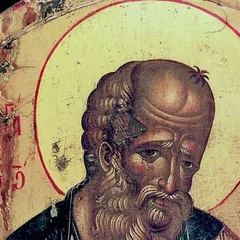 The apostle Johndisciple of Jesus
 Polycarpc. 69–155 · Smyrna
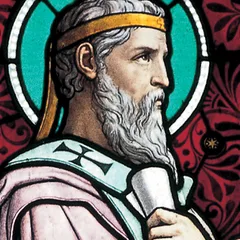 Irenaeusabout 180 · Lyon
Irenaeus, Against Heresies 3.3.4. Icons: Andreas Ritsos (1449–50); Polycarp icon. Irenaeus: window by Lucien Bégule (1901). Public domain.
Lee taught nothing about their heavenly powers or their lesser creator god. What he shared with them was their way of treating other Christians and the Bible, and that was Irenaeus’s complaint too. The Valentinians, he says, went among church members “imitating our phraseology” (Against Heresies, Book III, Chapter 15 ↗), and asked “how it is, that when they say the same things, and hold the same doctrine, we call them heretics?” The earlier post on the “high gospel” showed one example: a “low” gospel for ordinary believers and a “high” one for those who see further. There are five more.
In 2013 the minister Gordon Ferguson ↗, after reading Watchman Nee’s The Spiritual Man and Lee’s The All-Inclusive Christ, called their system “a form of neo-Gnosticism.” Nee’s system, he wrote, has “its own specific terminology, which means that the uninitiated cannot really grasp the ‘deep teachings’ of God.” And “this is where Nee’s and Lee’s teachings especially converge with Gnosticism”: the Gnostics “looked down on those who just simply clung to the specifics of the Bible” (Watchman Nee’s Teaching on Soul and Spirit: A Form of Neo-Gnosticism ↗). Put Lee’s words next to Irenaeus’s and it is easy to see why.
- Christians sorted into spiritual and soulishValentinians: church members are “animal men” with “a mere faith.” Lee: “Many Christians can be compared to cows listening to music.”Against Heresies 1.6.2 · Life-Study of 1 Corinthians 17
- A question proves a lower natureValentinians: the objector is “not capable of receiving the truth.” Lee: “a soulish person cannot discern a spiritual person.”Against Heresies 3.15.2 · Life-Study of 1 Corinthians 17
- A hidden meaning over the plain oneValentinians: the king’s jewels rearranged into a fox. Lee: following Jesus in meekness is “apparently… right, but intrinsically… absolutely off.”Against Heresies 1.8.1 · High Peak, ch. 2
- Sin blamed on a foreign natureManichaeans: “not we that sin, but… other nature.” Lee: “In our flesh we are one with Satan.”Confessions 5.10.18 · Life-Study of Romans 49
- Grace that can never be lostValentinians: they are saved “whatever the sort of actions in which they indulged.” Lee: “Once we have such a faith, we can never lose it.”Against Heresies 1.6.2 · Life-Study of Romans 8
Spiritual and soulish
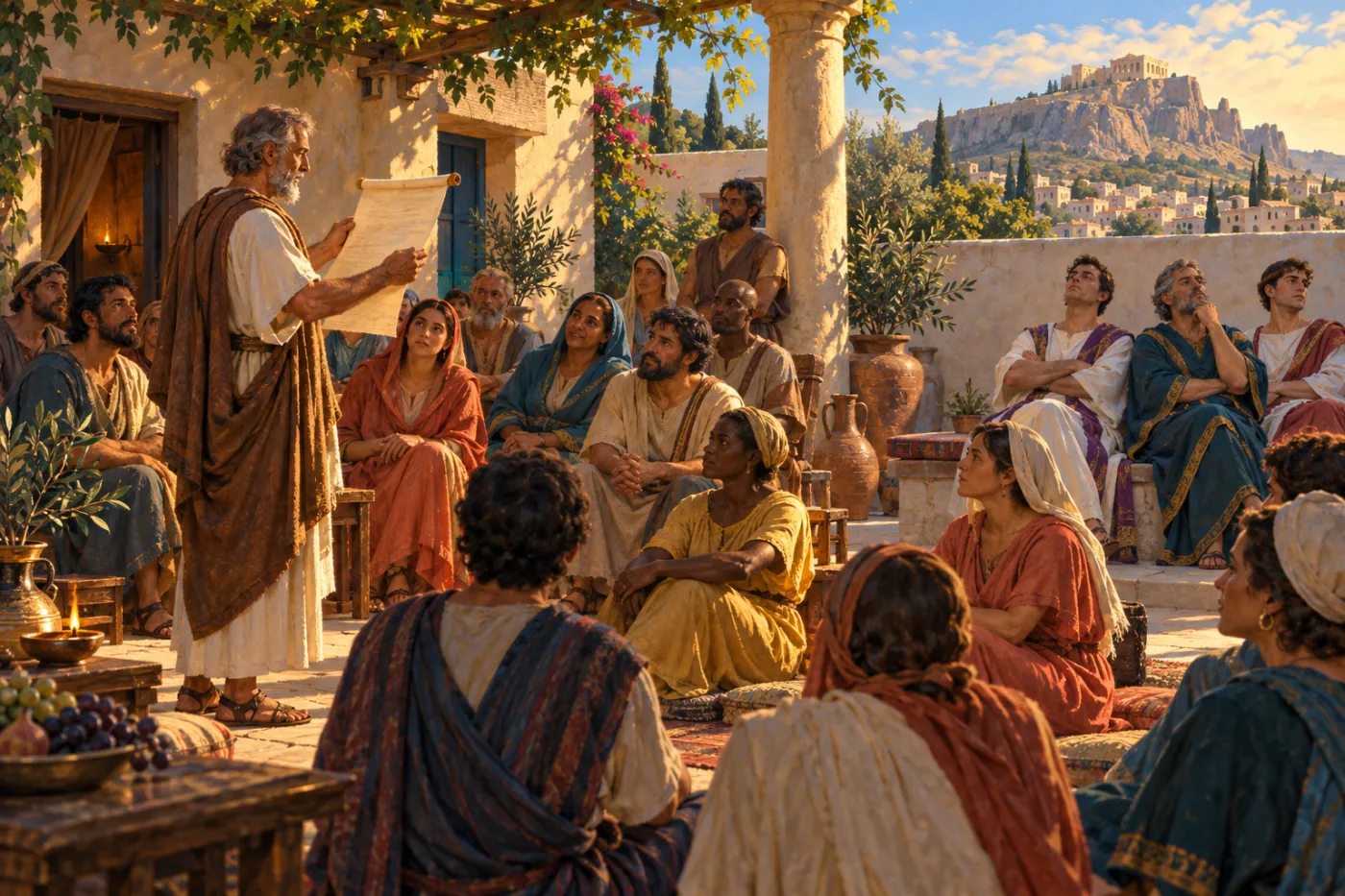
The Valentinians sorted people into three kinds: “spiritual, material, and animal” (Against Heresies, Book I, Chapter 7 ↗). The word is psychikos, from psychē, the soul; today we would say “soulish.” The material would perish. The spiritual were saved by what they were. The soulish were in between, and Irenaeus says exactly who they meant: ordinary church members, “established by their works, and by a mere faith, while they have not perfect knowledge. We of the Church, they say, are these persons.”
They found the classes in Paul. “The animal man receives not the things of the Spirit,” they quoted from 1 Corinthians 2:14, and “he that is spiritual judges all things” (Against Heresies, Book I, Chapter 8 ↗) from the next verse.
 Watchman NeeThe Spiritual Man (1928)
 Witness Lee1905–1997
Photos: Nee, public domain (Wikimedia Commons); Lee, via witnesslee.wordpress.com.
Watchman Nee built his book The Spiritual Man on the line between spirit and soul, and Lee carried it on. The Recovery Version translates 1 Corinthians 2:14, “But a soulish man does not receive the things of the Spirit of God.” Lee explains: “A soulish man is a natural man, one living in his soul, not in his spirit.” And he applies it to other believers: “Today many Christians can be compared to cows listening to music: they have no appreciation or discernment of what they hear” (Life-Study of 1 Corinthians, msg. 17 ↗).

The Valentinians said the spiritual were born that way, but the soulish in between were “possessed of free-will,” and each “passes to the side to which inclination draws it” (Against Heresies 1.6.1 ↗). Lee said anyone could become spiritual by turning to the spirit. In both systems most Christians live in the soul, a few live in the spirit, and the few can judge everyone while no one can judge them.
The Valentinians said the spiritual were born that way; Lee said anyone could turn to the spirit. Both end in these two layers.
Paul doesn’t divide the church that way. In 1 Corinthians 2:14 the psychikos man is the one without the Spirit, set against “we” who “have received… the Spirit who is from God” (2:12). When Paul does rebuke believers in the next chapter, he calls them “carnal,” “babes in Christ,” and still “brethren.” What made them carnal was “envy, strife, and divisions” (3:1–3), not thinking too much. Elsewhere psychikos describes the “natural body” every believer has now (1 Corinthians 15:44) and wisdom that is “earthly, sensual, demonic” (James 3:15). Jude uses the same word for false teachers: “These are sensual persons [psychikoi], who cause divisions, not having the Spirit” (Jude 19). So in the Bible, “soulish” describes the people who split the church, not the ordinary believers in it.
“Those who do not exercise the spirit have no way to discern a spiritual man. Just as a cow has no appreciation of good music, so a soulish person cannot discern a spiritual person. Today many Christians can be compared to cows listening to music: they have no appreciation or discernment of what they hear. These Christians can readily understand worldly things or natural things, but they are not able to discern spiritual things or spiritual people.”
The Valentinians, as Irenaeus reports
- Three kinds of men: “spiritual, material, and animal”Against Heresies 1.7.5
- Church members are the “animal” (soulish) men, with “a mere faith”Against Heresies 1.6.2
- Read from “the animal man receives not the things of the Spirit”Against Heresies 1.8.3, on 1 Corinthians 2:14
Witness Lee
- “A soulish man… one living in his soul, not in his spirit”Life-Study of 1 Corinthians, msg. 17
- “Many Christians can be compared to cows listening to music”Life-Study of 1 Corinthians, msg. 17
- “The shallow gospel that Christianity preaches… a low gospel”A Deeper Study of the Divine Dispensing, ch. 2
Jude’s answer: “These are sensual persons [psychikoi], who cause divisions, not having the Spirit” (Jude 19).
When the question is the symptom

Irenaeus noticed what the two-class system did to questions. When a hearer pressed the Valentinians for explanations or raised objections, “they affirm that he is one not capable of receiving the truth, and not having from above the seed… and thus really give him no reply, but simply declare that he is of the intermediate regions, that is, belongs to animal natures.” The objection was taken as proof of a lower nature, and nobody had to answer it.
Lee taught the same thing. Paul says the spiritual man “is rightly judged by no one” (1 Corinthians 2:15). Lee draws the conclusion: “Those who do not exercise the spirit have no way to discern a spiritual man… a soulish person cannot discern a spiritual person” (Life-Study of 1 Corinthians, msg. 17 ↗). Reading the Bible with the mind belongs to the lower class too: “To merely search the Scriptures is to come to the tree of knowledge” (Life-Study of Genesis, msg. 13 ↗), which in Lee’s teaching is the tree Satan uses.
Put those together and a member who checks a teaching against the Bible and finds a problem has an answer waiting before he speaks. If he is troubled, he is in his mind. If he cannot see it, he is soulish. If he keeps investigating, he has gone to the wrong tree. Nobody has to show him from Scripture where he is wrong.
In Lee’s framework
- 1A member checks a teaching against the Bible
- 2He finds a problem and raises it
- 3He is “in his mind,” at “the tree of knowledge”Life-Study of Genesis 13
- 4“A soulish person cannot discern a spiritual person”Life-Study of 1 Corinthians 17
- 5The objection is never answered from Scripture
The Bereans
- 1They hear Paul, an apostle
- 2They search the Scriptures dailyActs 17:11
- 3They ask “whether these things were so”Acts 17:11
- 4Luke calls them “fair-minded”Acts 17:11
Luke praised people for doing exactly that. The Bereans checked even Paul, and “searched the Scriptures daily to find out whether these things were so.” Luke calls them “fair-minded” (Acts 17:11). Paul told the Thessalonians, “Test all things; hold fast what is good” (1 Thessalonians 5:21). John told the churches to “test the spirits” (1 John 4:1). Irenaeus gave the reason: “Error is plausible, and bears a resemblance to the truth, but requires to be disguised; while truth is without disguise, and therefore has been entrusted to children.”
“Even the one Bible can be two trees to us. If you depend on the Lord and exercise your spirit as you touch the Word, the Bible is the tree of life. However, if you exercise your mind and investigate the Bible as a book of letters, it will be the tree of knowledge.”
A meaning beneath the plain one

Irenaeus’s best-known image is about how the Gnostics read the Bible. Their method, he says, is like taking apart a jeweled portrait of a king and rearranging the gems into a fox, then insisting it is still the king. The gems were real, just as the verses they quoted were real Scripture, but they “disregard the order and the connection of the Scriptures” (Against Heresies, Book I, Chapter 8 ↗).
Lee did something similar, and said so. He was taught as a young man that following Jesus means loving people as Jesus did, being meek and patient as He was. Lee’s verdict: “Apparently, this teaching is right, but intrinsically, it is absolutely off.” Following Jesus, intrinsically, is “to be a xerox copy of that first God-man,” to live “not by the human life but by the divine life.” Lee does not drop the virtues: God is to be expressed “in all His divine attributes becoming the human virtues” (High Peak, ch. 2 ↗).
Irenaeus describes a second move as well. When the Gnostics were “confuted from the Scriptures,” he says, “they turn round and accuse these same Scriptures, as if they were not correct, nor of authority,” and claim “that the truth cannot be extracted from them by those who are ignorant of tradition” (Against Heresies 3.2.1 ↗). Lee did this with whole books.
He said Psalm 1 “was written wrongly with a wrong concept, a human concept” (Life-Study of Psalms, msg. 1 ↗), that to fear God and turn away from evil as Job did “is not adequate, and actually this is not positive” (Life-Study of Job, msg. 2 ↗), that certain words in James “are the words of James and not the words of God” (Life-Study of James, msg. 14 ↗), and that Solomon’s conclusions in Ecclesiastes “should not be considered the divine revelation from God” (Life-Study of Ecclesiastes, msg. 2 ↗). Each time the measure was his own system: God’s economy, the God-man, expressing God. A separate post sets each passage beside his reading and what the rest of Scripture says.
The apostles taught the plain meaning. “Learn from Me, for I am gentle and lowly in heart,” Jesus said (Matthew 11:29). Peter wrote that Christ suffered, “leaving us an example, that you should follow His steps,” and then described the steps: He did not sin, did not revile, did not threaten (1 Peter 2:21–23). John said, “He who says he abides in Him ought himself also to walk just as He walked” (1 John 2:6).
Irenaeus pointed to the faith the churches taught in public, the same in every region: “Nor will any one of the rulers in the Churches, however highly gifted he may be in point of eloquence, teach doctrines different from these (for no one is greater than the Master).” For Irenaeus, a teacher who claimed to see further than the apostles had already gone wrong.
“Their manner of acting is just as if one, when a beautiful image of a king has been constructed by some skilful artist out of precious jewels, should then take this likeness of the man all to pieces, should rearrange the gems, and so fit them together as to make them into the form of a dog or of a fox, and even that but poorly executed; and should then maintain and declare that this was the beautiful image of the king which the skilful artist constructed.”
Satan in the body
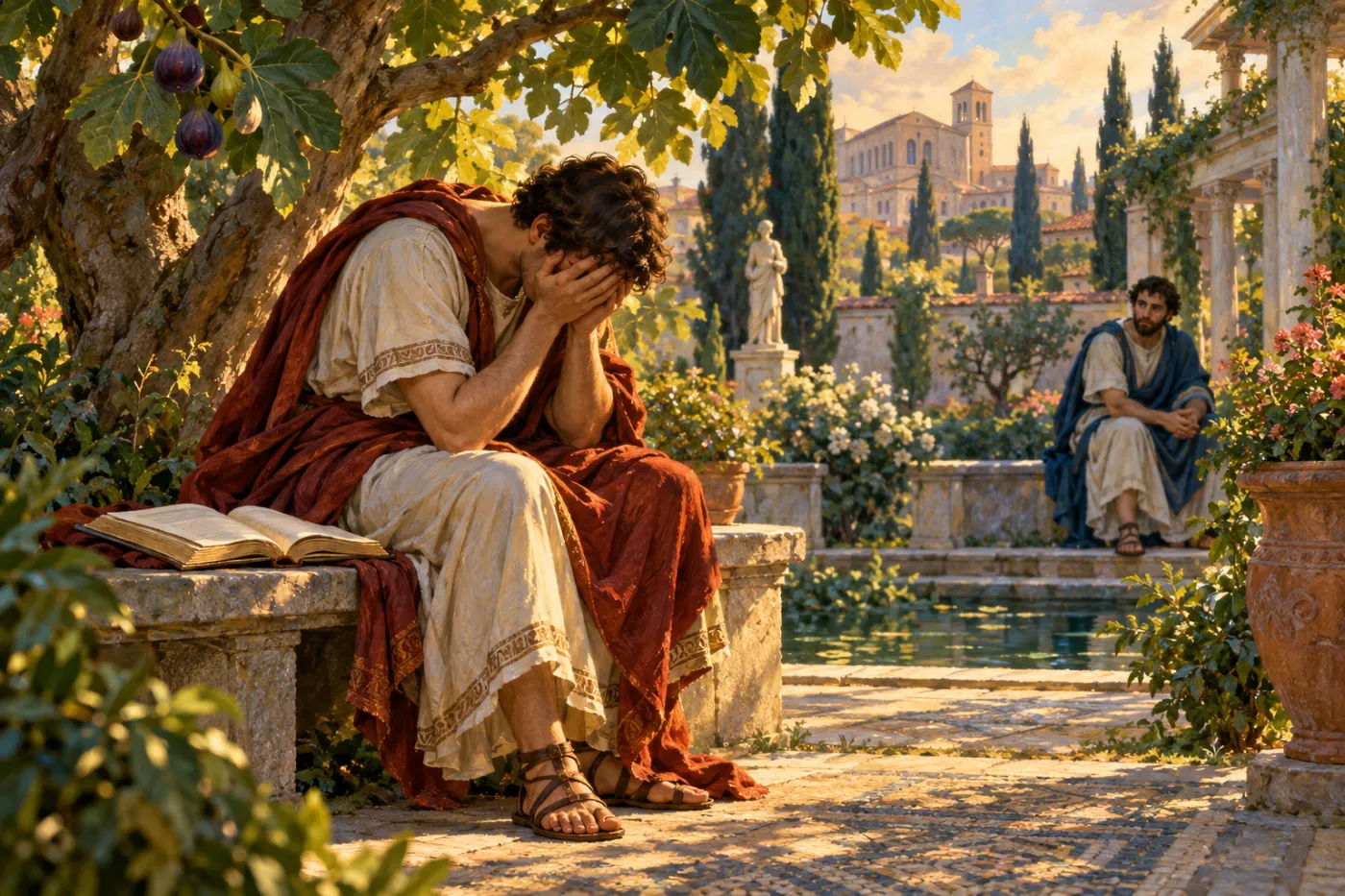
The Gnostic family of religions had one more descendant, Manichaeism, and Augustine of Hippo ↗ belonged to it for nine years before his conversion. The Manichaeans taught that two natures, one of light and one of darkness, are mixed together in every person. Augustine later described what that belief did for him: “It still seemed to me that it was not we that sin, but that I know not what other nature sinned in us. And it gratified my pride to be free from blame.”
Lee taught something close to that. “Sin is the nature of Satan injected into man,” he wrote. “When God created man, He created him with a body that was pure. But when Satan injected himself as sin into man’s body, the body became corrupted. Hence, in the Bible man’s body is called the flesh. In our flesh we are one with Satan, for the flesh is Satan’s dwelling place in man.” A believer, he said, “is rather complicated because Satan as sin is in his flesh and the Lord as the life-giving Spirit is in his spirit” (Life-Study of Romans, msg. 49 ↗).
Lee builds on Romans 7:18, “in my flesh nothing good dwells.” But look at where that verse sits. In 7:7–13 Paul tells, in the past tense, what happened when the law met sin: “when the commandment came, sin revived and I died” (7:9). Then in 7:14–25 he switches to the present tense to make that struggle vivid, speaking as a man under the law: “I am carnal, sold under sin” (7:14). That is not how he describes Christians. Just before, he speaks of the time “when we were in the flesh” (7:5) and tells believers they have “been set free from sin” (6:18). Just after, he says, “you are not in the flesh but in the Spirit” (8:9). And nowhere else in his letters does Paul describe the Christian life as defeat by sin. He says the opposite: “sin shall not have dominion over you, for you are not under law but under grace” (6:14); “Walk in the Spirit, and you shall not fulfill the lust of the flesh” (Galatians 5:16). Chrysostom read the chapter as human nature under the law, and so did Augustine before he later changed his mind. Paul calls the believer’s body “the temple of the Holy Spirit” (1 Corinthians 6:19), not Satan’s dwelling place. Augustine himself quoted Romans 7 about his struggle just before his conversion, and still concluded, “It was I, even I myself” (Confessions, Book VIII, Chapter 10 ↗).
Romans 6:1–7:6 · believers
- “Having been set free from sin”Romans 6:18
- “When we were in the flesh”: pastRomans 7:5
Romans 7:7–25 · a man under the law
- Past tense: “when the commandment came, sin revived and I died”Romans 7:7–13
- Present tense, for vividness: “I am carnal, sold under sin”Romans 7:14–25
- Lee’s text: “in my flesh nothing good dwells”Romans 7:18 · Life-Study of Romans 49
Romans 8 · believers
- “You are not in the flesh but in the Spirit”Romans 8:9
- “Your body is the temple of the Holy Spirit”1 Corinthians 6:19
Jesus said sin comes from the heart: “For from within, out of the heart of men, proceed evil thoughts, adulteries, fornications, murders… All these evil things come from within and defile a man” (Mark 7:21–23). James says the same: “Each one is tempted when he is drawn away by his own desires” (James 1:14). If my sin is mine, I can confess it and be forgiven (1 John 1:9). If it is Satan’s nature in my body, it is easy to blame him for it, as Augustine did for nine years.
The Manichaeans, as Augustine recalls
 “Not we that sin, but… other nature sinned in us”Confessions 5.10.18
- “Two kinds of minds in us, one good, the other evil”Confessions 8.10.22
Witness Lee
- “Sin is the nature of Satan injected into man”Life-Study of Romans, msg. 49
- “In our flesh we are one with Satan”Life-Study of Romans, msg. 49
Jesus and the apostles
- “From within, out of the heart of men, proceed evil thoughts”Mark 7:21
- “Drawn away by his own desires”James 1:14
- “Your body is the temple of the Holy Spirit”1 Corinthians 6:19
Grace that cannot be lost
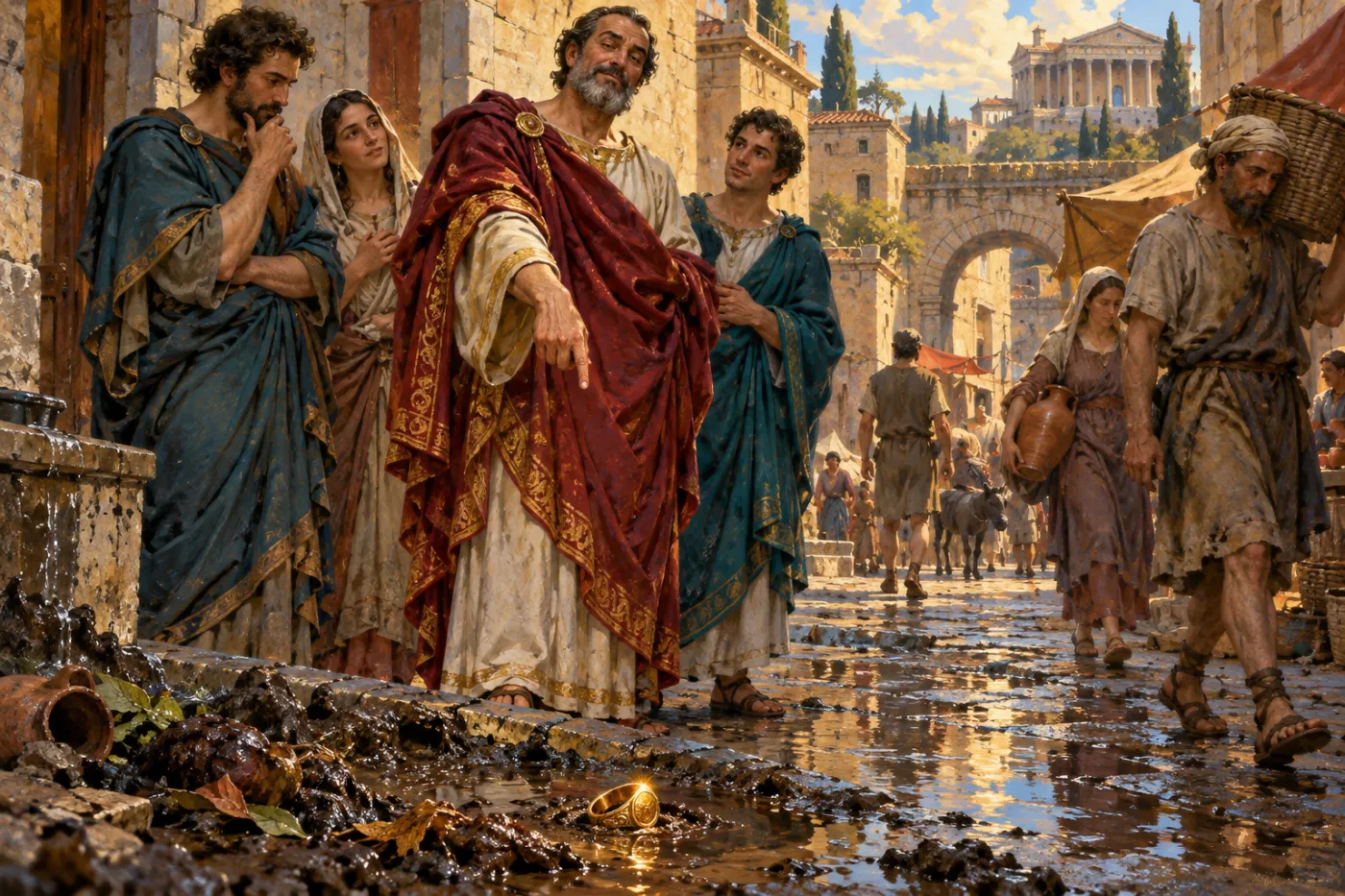
Irenaeus records one more Valentinian belief. The spiritual, they said, “shall be entirely and undoubtedly saved, not by means of conduct, but because they are spiritual by nature.” Like “gold, when submersed in filth,” they could not “lose their spiritual substance, whatever the material actions in which they may be involved.” They also mocked church members for believing the opposite: “they declare that we simply receive grace for use, wherefore also it will again be taken away from us; but that they themselves have grace as their own special possession” (Against Heresies, Book I, Chapter 6 ↗).
Lee put a believer’s security in the same place, in something put into us that cannot come out. Faith, he taught, “is absolutely a reaction caused by a divine infusion… Once we have such a faith, we can never lose it. It is deeper than our blood, for it has been infused into us and constituted into our being. Although we may try not to believe, we can never succeed” (Life-Study of Romans, msg. 8 ↗). And: “Whatever we have done, whatever we are doing, and whatever we shall do cannot affect our salvation” (Life-Study of Hebrews, msg. 46 ↗). In his teaching, salvation rests on a divine substance inside the believer that nothing he does can reach.
The two systems also give the lower class a lesser place. The Valentinians said the spiritual would enter the Pleroma, while “the souls of the righteous” would “repose” in an intermediate place, “but nothing of an animal nature shall find admittance to the Pleroma” (Against Heresies 1.7.1 ↗). Lee, carrying on what Watchman Nee took from the Victorian teacher Robert Govett, taught that believers who do not overcome are saved but miss the kingdom, and that the outer darkness is “not the punishment of false believers, but of genuine believers who are not faithful” (Life-Study of Matthew, msg. 66 ↗), a “dispensational punishment” for the thousand years. Lee’s exclusion ends and theirs does not, but in both the ordinary believer is kept out of what the spiritual few receive. The post on millennial exclusion tests Lee’s reading against the Bible.
The belief the Gnostics mocked was the church’s. Irenaeus passes on the teaching of an elder “who had heard it from those who had seen the apostles” (Against Heresies, Book IV, Chapter 27 ↗): we “ought ourselves to fear, lest perchance, after [we have come to] the knowledge of Christ, if we do things displeasing to God, we obtain no further forgiveness of sins, but be shut out from His kingdom.” Then he quotes Paul to the Romans: “For if God did not spare the natural branches, He may not spare you either” (Romans 11:21).
Romans 8 is often quoted against this, but the same letter holds both. Paul lists what cannot separate believers from Christ’s love: “tribulation, or distress, or persecution, or famine, or nakedness, or peril, or sword,” death and life, angels and powers (8:35–39). Three chapters later he tells the same church, “toward you, goodness, if you continue in His goodness. Otherwise you also will be cut off” (11:22). Nothing from outside can tear a believer away from Christ, but a believer can still turn away, which is why Hebrews warns against “an evil heart of unbelief in departing from the living God” (Hebrews 3:12).
The Valentinians, as Irenaeus reports
- Saved “not by means of conduct, but because they are spiritual by nature”Against Heresies 1.6.2
- Like gold in filth, they cannot “lose their spiritual substance”Against Heresies 1.6.2
- Church members’ grace “will again be taken away”; theirs is “their own special possession”Against Heresies 1.6.4
Witness Lee
- “Once we have such a faith, we can never lose it”Life-Study of Romans, msg. 8
- “Although we may try not to believe, we can never succeed”Life-Study of Romans, msg. 8
- “Whatever we shall do cannot affect our salvation”Life-Study of Hebrews, msg. 46
The elders and the apostles
- “Lest… we obtain no further forgiveness of sins, but be shut out from His kingdom”Against Heresies 4.27.2
- “If you continue in His goodness. Otherwise you also will be cut off”Romans 11:22
- “An evil heart of unbelief in departing from the living God”Hebrews 3:12
The faith once delivered

Paul ended his first letter to Timothy with a warning: “Guard what was committed to your trust, avoiding the profane and idle babblings and contradictions of what is falsely called knowledge—by professing it some have strayed concerning the faith” (1 Timothy 6:20–21). The word for knowledge is gnōsis. Jude told the churches to “contend earnestly for the faith which was once for all delivered to the saints” (Jude 3). Nothing was held back for a higher class of believers to learn later.
If you were taught that most Christians are soulish, that your questions show you are in your mind, that nothing you do can cost you your salvation, or that the plain words of Jesus are “apparently right” but “intrinsically off,” you were taught something the church heard and rejected in the second century. It answered with one faith, preached openly, that a child can check against the Scriptures, and no teacher greater than the Master.
Scripture considered in this post
2:14But the natural man does not receive the things of the Spirit of God, for they are foolishness to him; nor can he know them, because they are spiritually discerned.
15But he who is spiritual judges all things, yet he himself is rightly judged by no one.
16For “who has known the mind of the Lord that he may instruct Him?” But we have the mind of Christ.
3:1And I, brethren, could not speak to you as to spiritual people but as to carnal, as to babes in Christ.
2I fed you with milk and not with solid food; for until now you were not able to receive it, and even now you are still not able;
3for you are still carnal. For where there are envy, strife, and divisions among you, are you not carnal and behaving like mere men?
The “natural” man (psychikos, “soulish” in the Recovery Version) is the one without the Spirit. When Paul rebukes believers, he calls them carnal babes and still brethren, and the evidence he names is envy, strife, and divisions.
3Beloved, while I was very diligent to write to you concerning our common salvation, I found it necessary to write to you exhorting you to contend earnestly for the faith which was once for all delivered to the saints.
17But you, beloved, remember the words which were spoken before by the apostles of our Lord Jesus Christ:
18how they told you that there would be mockers in the last time who would walk according to their own ungodly lusts.
19These are sensual persons, who cause divisions, not having the Spirit.
The faith was delivered once for all. Jude’s word for those who cause divisions, “sensual,” is psychikoi, the same word the Valentinians used for ordinary church members.
11These were more fair-minded than those in Thessalonica, in that they received the word with all readiness, and searched the Scriptures daily to find out whether these things were so.
The Bereans checked an apostle’s teaching against the Scriptures, and Luke calls them noble for it.
20Well said. Because of unbelief they were broken off, and you stand by faith. Do not be haughty, but fear.
21For if God did not spare the natural branches, He may not spare you either.
22Therefore consider the goodness and severity of God: on those who fell, severity; but toward you, goodness, if you continue in His goodness. Otherwise you also will be cut off.
Paul writes this to the same church that heard Romans 8. Believers stand by faith, and those who do not continue in God’s goodness will be cut off.
20And He said, “What comes out of a man, that defiles a man.
21For from within, out of the heart of men, proceed evil thoughts, adulteries, fornications, murders,
22thefts, covetousness, wickedness, deceit, lewdness, an evil eye, blasphemy, pride, foolishness.
23All these evil things come from within and defile a man.”
Jesus locates sin in the human heart, not in a foreign nature lodged in the body.