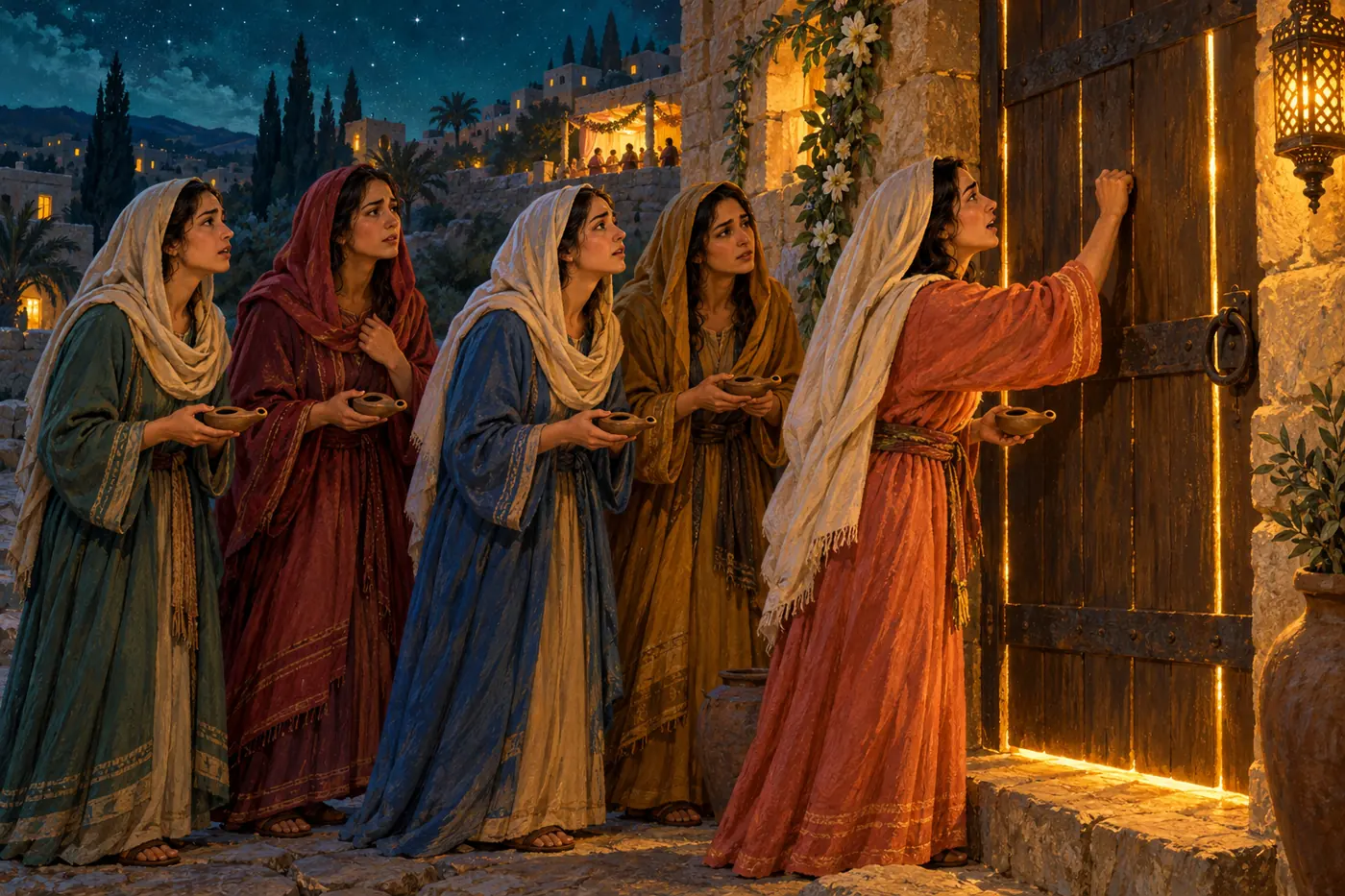
Millennial exclusion teaches that some eternally saved people will be barred from Christ’s thousand-year reign and temporarily punished before entering eternal life. In the Recovery, it is often presented through the language of overcoming, kingdom reward, outer darkness, and losing the soul.
Witness Lee states it openly in his Life-Study of Revelation, Message 57 ↗: “To the mature and perfected ones, the millennium will be a reward and an enjoyment. But to the immature ones, it will be a loss and a dealing.” He then says God will use matters related to the second death “to discipline and to punish the immature believers”. In his Life-Study of Matthew ↗ he applies Jesus’ warnings about outer darkness to Christians directly: “This is not the punishment of false believers, but of genuine believers who are not faithful” (Message 66 ↗), and “Those who are not overcomers will be excluded from the enjoyment of the kingdom during the millennium and will probably be punished” (Message 58 ↗). In this system, Jesus’ warnings about final judgment become a temporary, thousand-year penalty for people who are supposedly already saved.
This doctrine was also used to keep people in the fold. In an appendix to Speaking the Truth in Love that collects statements from the Full-time Training in Taipei, former senior coworker John Ingalls ↗ records what trainers told trainees who wanted to go back to their home churches: “If you leave the training, you’ll miss the kingdom” (Speaking the Truth in Love, Appendix A ↗). The threat worked because Lee’s teaching supplied the penalty: missing the kingdom meant exclusion from Christ’s reign and punishment in outer darkness. Leaving a Recovery-controlled setting could therefore be made to feel like risking a terrifying future judgment. A warning like that does not have to persuade anyone. It only has to frighten, and fear keeps people in.
The test case: “I never knew you”
That fear depends on one claim: that Jesus’ warnings about outer darkness describe temporary discipline for people he has already saved. Matthew 7:21–23 tests that claim directly. Jesus describes people who call him “Lord,” prophesy in his name, cast out demons, and do mighty works in his name. Yet he tells them, “I never knew you; depart from Me, you who practice lawlessness!” He does not say, “I knew you, but you will miss the millennium.” He says, “I never knew you.” This is the exposure of false professors at final judgment, not temporary discipline for saved believers.
Jesus defines eternal life as knowing the Father and the Son (John 17:3). He says of his true sheep, “I know them, and they follow Me,” and gives them eternal life so that they never perish (John 10:27–28). When he says, “I never knew you,” he is not describing Christians who temporarily lose a reward. He is describing people who never belonged to him.
Throughout Scripture, being known by God is what it means to belong to him. “I am the good shepherd; and I know My sheep, and am known by My own” (John 10:14). “The Lord knows those who are His” (2 Timothy 2:19). “If anyone loves God, this one is known by Him” (1 Corinthians 8:3). Paul describes conversion as coming to know God, “or rather are known by God” (Galatians 4:9). The same words close the door on the foolish virgins: “Assuredly, I say to you, I do not know you” (Matthew 25:12). Lee says these virgins “represent the believers who have been regenerated” and that “to not know here indicates not to recognize, not to approve” (Life-Study of Matthew, Message 64 ↗). But Scripture uses “known by Him” for those who are his, not for a lower rank among the saved. Jesus never says, “I knew you, but you will miss the millennium.”
Those he knows
- “I know My sheep, and am known by My own”John 10:14
- “The Lord knows those who are His”2 Timothy 2:19
- “I know them… And I give them eternal life”John 10:27–28
Known by him: his own, with eternal life.
Those he does not know
- “I never knew you; depart from Me”Matthew 7:23
- “I do not know you” (the door was shut)Matthew 25:12
- “I do not know you, where you are from. Depart from Me”Luke 13:27
- Lee: “not to recognize, not to approve”Life-Study of Matthew, message 64
Never known by him: never his.
Matthew presents two final destinies, not three

Matthew’s context rules out Lee’s interpretation. Jesus presents two final destinies, not a third, temporary category for redeemed people: the broad way leads to destruction, while the narrow way leads to life (Matthew 7:13–14). In Matthew 8:11–12, Israelites who presumed they belonged at Abraham’s feast are cast into outer darkness while believing Gentiles enter.
In Matthew 22:11–14, the man without a wedding garment is bound hand and foot and thrown into outer darkness. He is not a saved believer receiving correction but an unqualified guest excluded from the King’s feast. In Matthew 25:30, the worthless servant is likewise cast into outer darkness. Then Jesus concludes the same judgment discourse by separating humanity into two groups: the righteous enter eternal life and the wicked enter eternal punishment (Matthew 25:31–46).
Lee has to insert a third category that Jesus never mentions: redeemed Christians cast into outer darkness, excluded from the kingdom, and punished for exactly one thousand years before entering eternal life. Matthew never calls those cast out redeemed, never identifies outer darkness with temporary discipline, and never says the punishment ends after the millennium. The repeated contrast is life or destruction, entrance or exclusion, eternal life or eternal punishment.
What Matthew presents
- The righteous Enter the kingdom→Eternal life Matthew 7:14; 8:11; 25:34, 46
- The wicked Cast into outer darkness→Eternal punishment Matthew 7:13; 8:12; 22:13; 25:30, 46
What Lee’s system adds
- Mature believers Millennial reward→Eternal life
- Immature believers Outer darkness for 1,000 years→Eternal life The third category Matthew never names
- Unbelievers Eternal punishment
Witness Lee, Life-Study of Revelation, Message 57
One phrase, six times
Lee’s own commentary shows how the third category is built. Matthew uses the phrase “weeping and gnashing of teeth” six times (8:12; 13:42; 13:50; 22:13; 24:51; 25:30). Lee grants that it “is used twice concerning the perdition of the false believers (13:42) and the evil heathen (13:50),” who are cast into the furnace of fire, and that “those who perish in eternal fire will weep and gnash their teeth.” The other four, he says, describe “the defeated believers,” and “this does not refer to eternal perdition, but to dispensational punishment” (Life-Study of Matthew, Message 66 ↗).
Nothing in the text marks the switch. In Greek the sentence is identical, word for word, in all six places: ἐκεῖ ἔσται ὁ κλαυθμὸς καὶ ὁ βρυγμὸς τῶν ὀδόντων, “there will be weeping and gnashing of teeth.” It is the same Gospel, the same Speaker, and the same words. Lee supplies the difference.
For the “sons of the kingdom” in Matthew 8:12, whom he calls “the saved Jews” (Life-Study of Matthew, msg. 25 ↗), Lee points to Luke 13:24–30 (Life-Study of Matthew, Message 25 ↗). Luke’s parallel settles who they are. The master of the house answers, “I tell you I do not know you, where you are from. Depart from Me, all you workers of iniquity.” Then: “There will be weeping and gnashing of teeth, when you see Abraham and Isaac and Jacob and all the prophets in the kingdom of God, and yourselves thrust out” (Luke 13:27–28). Lee calls them saved. Jesus says he does not know them.
Matthew never puts an end on the outer darkness. Lee adds one: the millennium. Where Peter and Jude speak of the darkness reserved for false teachers, they do give it a length: “the blackness of darkness forever” (2 Peter 2:17; Jude 13).
Lee: “perdition”
- Cast into the furnace of fireMatthew 13:42
- Cast into the furnace of fireMatthew 13:50
Lee: “defeated believers”
- Cast out into outer darknessMatthew 8:12
- Cast into outer darknessMatthew 22:13
- His portion with the hypocritesMatthew 24:51
- Cast into the outer darknessMatthew 25:30
All six end with the same Greek sentence: ἐκεῖ ἔσται ὁ κλαυθμὸς καὶ ὁ βρυγμὸς τῶν ὀδόντων. Lee’s labels: Life-Study of Matthew, message 66.
Peter: an everlasting kingdom
Lee reads the kingdom outside Matthew the same way. Peter urges believers, “be even more diligent to make your call and election sure, for if you do these things you will never stumble; for so an entrance will be supplied to you abundantly into the everlasting kingdom of our Lord and Savior Jesus Christ” (2 Peter 1:10–11). Lee says this kingdom “will be a reward to His faithful believers… so that they may participate, in the millennium, in His kingship,” and that “a good number of Christians will not have such an entrance” (Life-Study of 2 Peter, Message 6 ↗).
Peter does not call it a thousand-year kingdom. He calls it everlasting, aiōnios, the same word as “everlasting life” (John 3:16) and “everlasting punishment” (Matthew 25:46). Lee has to turn an everlasting kingdom into a thousand-year reward. Nor does Peter set a rich entrance against a late one. What he ties to the entrance is the believer’s “call and election” itself, and he says the one who lacks these things “has forgotten that he was cleansed from his old sins” (2 Peter 1:9).
The rest of the letter shows the other outcome. Those who “have escaped the pollutions of the world through the knowledge of the Lord and Savior Jesus Christ” and are entangled again end up worse than at the beginning (2 Peter 2:20–21). Peter closes by warning believers, “beware lest you also fall from your own steadfastness” (2 Peter 3:17). He sets an everlasting kingdom against everlasting darkness, with no thousand-year term in between.
Paul and Luke give no third category
Paul’s warning to the Galatians cannot be fitted into Lee’s system either. He reminds them, “You ran well,” then asks who hindered them from obeying the truth (Galatians 5:7). To those seeking to be justified by the law, he says, “Christ will profit you nothing” and “you have fallen from grace” (Galatians 5:2, 4). Paul does not reassure them that they remain eternally secure while awaiting a thousand-year penalty. His concern is that they turn back to the gospel, not that they accept a temporary exclusion from the kingdom.
The parallel warning about the wicked servant is equally direct. Matthew assigns the servant with the hypocrites; Luke says the master will “appoint him his portion with the unbelievers” (Luke 12:45-46). A servant placed with unbelievers is not a saved child receiving fatherly correction.
Romans 8:1 does not deny that God disciplines his children. It rules out condemning judgment for everyone in Christ. Lee calls outer darkness, exclusion from the kingdom, and punishment related to the second death “discipline,” but those are the images Scripture uses for final judgment.
Paul’s own fears point the same way. He tells the Corinthians they are saved “if you hold fast that word which I preached to you—unless you believed in vain” (1 Corinthians 15:2). He writes to the Galatians, “I am afraid for you, lest I have labored for you in vain” (Galatians 4:11), and he sent to the Thessalonians fearing that “our labor might be in vain” (1 Thessalonians 3:5). If the worst a believer could face were a thousand years of darkness followed by eternal life, no one Paul led to Christ could believe in vain, and none of his labor could be lost. Paul wrote as though it could be.
- “…unless you believed in vain”1 Corinthians 15:2
- “…lest I have labored for you in vain”Galatians 4:11
- “…and our labor might be in vain”1 Thessalonians 3:5
If the worst were a thousand years of darkness and then eternal life, nothing Paul did could be “in vain.”
Lee’s own commentaries contradict each other
Lee’s exposition of 1 John ↗ states the historic reading plainly, and on this point it is right. John is not describing outsiders. He is writing about people in the church who claim to know God: “He who says, ‘I know Him,’ and does not keep His commandments, is a liar, and the truth is not in him” (1 John 2:4). Lee applies the test the same way. He writes that no child of God “practices sin habitually,” that someone who lies continually “probably has not been born of God,” and that the one who practices sin “has not seen Him or known Him… This is the condition of an unbeliever.” Whether someone is a child of God or of the Devil, he says, “is manifested by what he practices, righteousness or sin” (Life-Study of 1 John, msg. 26 ↗).
Scripture draws the same line at the end of the Bible: “the cowardly, unbelieving, abominable, murderers, sexually immoral, sorcerers, idolaters, and all liars shall have their part in the lake which burns with fire and brimstone, which is the second death” (Revelation 21:8). Outside the city are “sorcerers and sexually immoral and murderers and idolaters, and whoever loves and practices a lie” (Revelation 22:15).
But when Lee reaches Paul’s list of the same sins in Galatians 5:19–21, which ends, “those who practice such things will not inherit the kingdom of God,” he reverses himself. The verse, he says, “is not related to a believer’s salvation,” and the people who practice these sins are believers who “will not inherit the coming kingdom as a reward” (Life-Study of Galatians, msg. 27 ↗).
The sins are the same, and so is the word “practice.” In 1 John, Lee says the practice of sin marks an unbeliever, even in someone who claims to know God. In Revelation, sexual immorality, sorcery, idolatry, and lying end in the second death. In Galatians, Lee calls the people who practice fornication, idolatry, and sorcery believers who merely lose a reward. These readings cannot all be true. Paul, John, and Revelation agree with one another (1 Corinthians 6:9–11; Ephesians 5:5–6). Only Lee’s reward reading of Paul stands apart.
“It is not related to a believer’s salvation. Those believers who practice the works of the flesh listed in these verses will not inherit the coming kingdom as a reward.”
“Whether one is a child of God or a child of the Devil is manifested by what he practices, righteousness or sin.”
| 1 John, as Lee explains it | Revelation 21:8; 22:15 | Galatians 5, as Lee explains it |
|---|---|---|
| Those who practice sin, even if they say “I know Him”1 John 2:4; 3:6–10 | The sexually immoral, sorcerers, idolaters, and all liars | Those who practice fornication, idolatry, sorcery, and the restGalatians 5:19–21 |
| Verdict: “the condition of an unbeliever”Lee, Life-study of 1 John, message 26 | Verdict: the lake of fire, the second deathRevelation 21:8 | Verdict: “believers” who lose a rewardLee, Life-Study of Galatians, message 27 |
“Do not be deceived”
Paul and John did not expect these warnings to go unchallenged. Again and again, when they say that those who practice these sins will not inherit the kingdom, they also tell the church not to let anyone talk them out of it. “Do you not know that the unrighteous will not inherit the kingdom of God? Do not be deceived” (1 Corinthians 6:9). “Let no one deceive you with empty words, for because of these things the wrath of God comes upon the sons of disobedience” (Ephesians 5:6). “Do not be deceived, God is not mocked… he who sows to his flesh will of the flesh reap corruption, but he who sows to the Spirit will of the Spirit reap everlasting life” (Galatians 6:7–8). “Little children, let no one deceive you… He who sins is of the devil” (1 John 3:7–8).
What these warnings guard against is not a smaller reward. Paul sets corruption against everlasting life, and the wrath of God against an inheritance in the kingdom of Christ and God (Ephesians 5:5–6). Nor did the apostles expect the deception to come from outside. John wrote “concerning those who try to deceive you” (1 John 2:26), people who had been in the church and gone out from it (1 John 2:19).
In Galatians 5:21, Paul says he is repeating himself: “of which I tell you beforehand, just as I also told you in time past, that those who practice such things will not inherit the kingdom of God.” He told them in person, then he put it in writing. Lee’s comment on that verse is the reassurance Paul wrote it to rule out: “It is not related to a believer’s salvation” (Life-Study of Galatians, msg. 27 ↗). The apostles told the churches more than once not to be deceived by anyone who says so.
The apostles
- “Do not be deceived”: the unrighteous “will not inherit the kingdom of God”1 Corinthians 6:9
- “Let no one deceive you with empty words”: “the wrath of God comes”Ephesians 5:6
- “Do not be deceived, God is not mocked”: the flesh reaps “corruption”Galatians 6:7–8
- “Let no one deceive you”: “he who sins is of the devil”1 John 3:7–8
- “I tell you beforehand, just as I also told you in time past”Galatians 5:21
Witness Lee
 “It is not related to a believer’s salvation”Life-Study of Galatians, message 27
Paul warned the churches against this reassurance before anyone gave it.
5For this you know, that no fornicator, unclean person, nor covetous man, who is an idolater, has any inheritance in the kingdom of Christ and God.
6Let no one deceive you with empty words, for because of these things the wrath of God comes upon the sons of disobedience.
Paul names the sins, names the outcome, and warns against anyone who would soften it.
7Do not be deceived, God is not mocked; for whatever a man sows, that he will also reap.
8For he who sows to his flesh will of the flesh reap corruption, but he who sows to the Spirit will of the Spirit reap everlasting life.
The harvest of the flesh is set against everlasting life, not against a reward in the millennium.
What about 1 Corinthians 3:15?
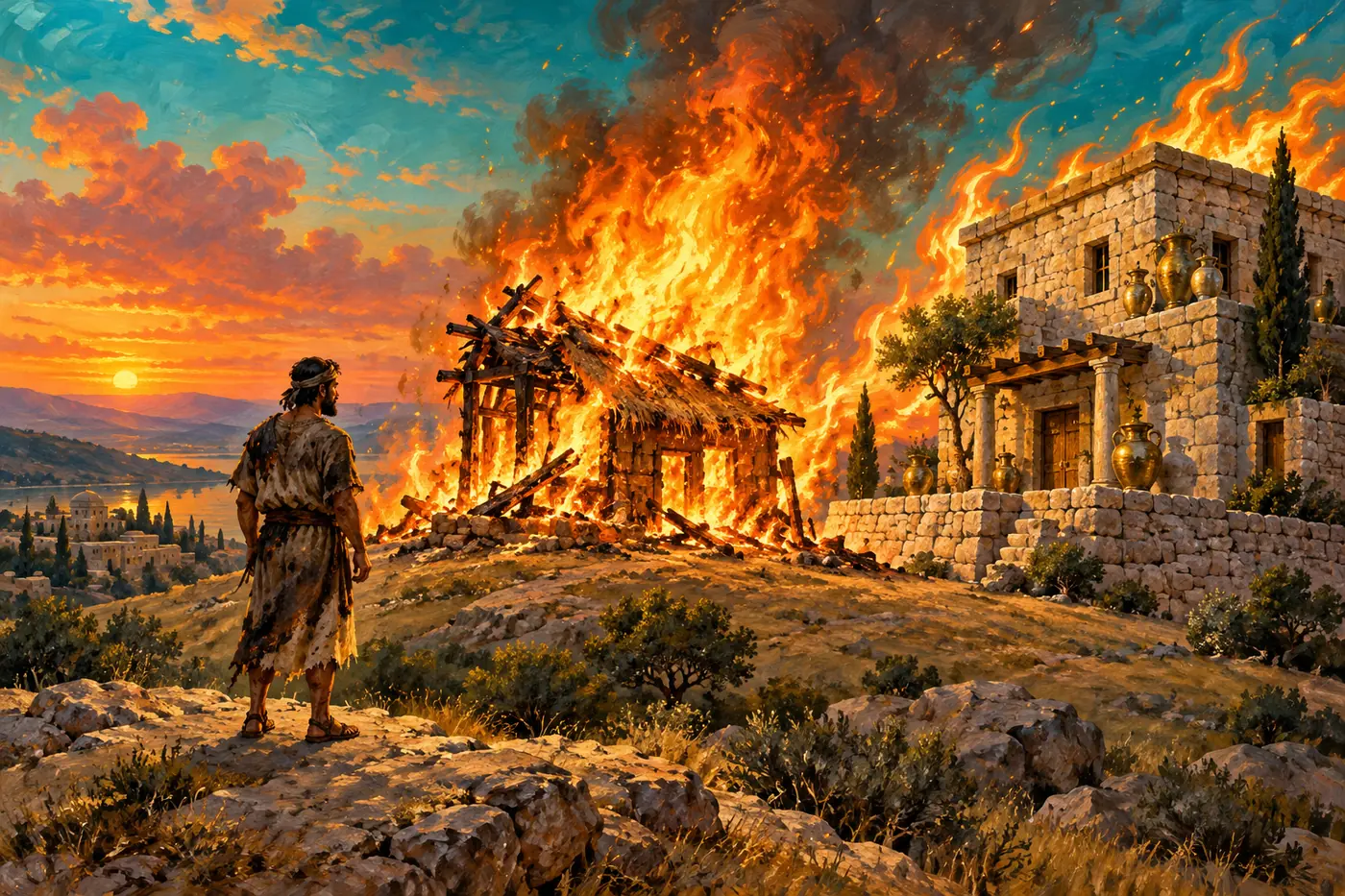
Defenders of millennial exclusion often point to 1 Corinthians 3:15: “If anyone’s work is burned, he will suffer loss; but he himself will be saved, yet so as through fire.” The verse does teach that a genuinely saved person can suffer loss of reward (compare 2 John 8). The question is whether it teaches anything more.
Paul is addressing a church divided over its teachers (1 Corinthians 3:1–4). He has just named two of them: “I planted, Apollos watered, but God gave the increase… For we are God’s fellow workers” (1 Corinthians 3:6, 9). The builders in verses 10–15 are workers like Paul and Apollos, building the church on the foundation of Christ. Gold, silver, and precious stones, or wood, hay, and straw, describe the quality of that work. They are not a list of sins. Lying, stealing, and adultery are not cheap building materials laid on Christ. “Each one’s work will become clear; for the Day will declare it, because it will be revealed by fire; and the fire will test each one’s work, of what sort it is” (1 Corinthians 3:13). The fire tests the work on a single Day. What burns is the work, and the builder is saved. The passage says nothing of outer darkness, exclusion from the kingdom, or a period of punishment.
Paul also does not leave the Corinthians to finish their correction after death. The next lines call for change now: “Let no one deceive himself… let him become a fool that he may become wise” (1 Corinthians 3:18). Just before that he names the other outcome: “If anyone defiles the temple of God, God will destroy him” (1 Corinthians 3:17).
Nor is 3:15 about someone living in the sins that exclude from the kingdom. Three chapters later Paul tells the same church that fornicators, idolaters, thieves, and the rest “will not inherit the kingdom of God,” and adds, “such were some of you. But you were washed” (1 Corinthians 6:9–11). A builder whose work is burned is one thing. Practicing the sins that exclude from the kingdom is another. Lee merges the two; Paul, in the same letter, keeps them apart.
Work built on Christ
- Who: builders like Paul and Apollos, “God’s fellow workers”1 Corinthians 3:5–10
- What is tested: the quality of their work, gold or straw1 Corinthians 3:12–13
- Outcome: the work may burn, but “he himself will be saved”1 Corinthians 3:15
Practicing sin
- Who: fornicators, idolaters, adulterers, thieves, the covetous, drunkards1 Corinthians 6:9–10
- Outcome: “will not inherit the kingdom of God”1 Corinthians 6:10
- Remedy: “such were some of you. But you were washed”1 Corinthians 6:11
Lee reads the second through the first, so practicing sin costs only a reward.
Every child of God is an overcomer

First John also overturns the idea that only a small elite group of Christians are overcomers. “Everyone who has been born of God overcomes the world,” and John immediately identifies the overcomer as the one who believes that Jesus is the Son of God (1 John 5:4–5). The same Greek verb, nikaō, is used for “overcomes” here and for the one “who overcomes” in Revelation’s promises. Overcoming is not an elite Recovery status. It is the identity of every person who has truly been born of God.
That definition does not conflict with Revelation 2–3. It explains it. Pergamum is commended for holding fast Christ’s name and not denying the faith (Revelation 2:13); Philadelphia is commended for keeping Christ’s word and not denying his name (Revelation 3:8–10). The calls to overcome summon churches to hold fast to Christ amid false teaching, compromise, and persecution. That is the persevering faith 1 John identifies with overcoming.
Revelation never says that some people Christ has saved will fail to overcome and spend one thousand years in outer darkness. It calls all who hear to repent, hold fast, and conquer through faith. Its conclusion gives two final outcomes: “He who overcomes shall inherit all things, and I will be his God and he shall be My son,” while the unbelieving have their part in the lake of fire (Revelation 21:7–8). There is no third group of redeemed people who receive hellish punishment for a millennium before entering eternal life.
Nor does 1 John present overcoming as sinless perfection. It distinguishes an occasional sin from a settled practice of lawlessness, and ties new birth to a life that is being changed by Christ (1 John 3:6–10). Jesus makes the same distinction when he warns that false prophets are known by their fruit (Matthew 7:15–16), immediately before his warning to those who call him “Lord” but are unknown to him. The wheat and tares likewise show that counterfeits can grow beside the true until the final separation (Matthew 13:24-30, 36-43). Scripture has a category for false profession. Lee’s system replaces it with a supposedly saved but defeated class that endures a temporary hellish penalty.
All who belong to Christ are God’s children and heirs with Christ (Romans 8:16–17). Scripture does not divide the redeemed into one class that inherits Christ’s kingdom and another class that receives postmortem hellish punishment.
13“I know your works, and where you dwell, where Satan’s throne is. And you hold fast to My name, and did not deny My faith even in the days in which Antipas was My faithful martyr, who was killed among you, where Satan dwells.”
Christ commends a church for holding fast to his name and faith amid costly pressure.
8“I know your works. See, I have set before you an open door, and no one can shut it; for you have a little strength, have kept My word, and have not denied My name.
9Indeed I will make those of the synagogue of Satan, who say they are Jews and are not, but lie—indeed I will make them come and worship before your feet, and to know that I have loved you.
10Because you have kept My command to persevere, I also will keep you from the hour of trial which shall come upon the whole world, to test those who dwell on the earth.
Christ commends Philadelphia for keeping his word, not denying his name, and persevering.
7He who overcomes shall inherit all things, and I will be his God and he shall be My son.
8But the cowardly, unbelieving, abominable, murderers, sexually immoral, sorcerers, idolaters, and all liars shall have their part in the lake which burns with fire and brimstone, which is the second death.
Revelation’s closing contrast is between the overcomer who inherits as God’s child and the unbelieving who face the second death, not between two classes of eternally saved people.
A later system, not an apostolic teaching
This is not simply historic premillennialism, which has appeared in several forms throughout church history. The specific system that excludes genuinely saved Christians from the millennial kingdom and assigns outer darkness or fiery punishment to them is much later. It is associated with the Victorian-era teacher Robert Govett, whose doctrine of believers’ exclusion from the millennium profoundly influenced the circles from which Watchman Nee drew his prophetic teaching.
Paul warned that in later times some would depart from the faith through “doctrines of demons” (1 Timothy 4:1). That does not make every later doctrine demonic. It does mean Christians must test later systems by the apostolic gospel instead of accepting them because they claim to make people more serious about holiness. Millennial exclusion fails that test by turning final-judgment warnings into temporary punishments for people it insists are eternally secure.
The Christians closest to the apostles taught something else. They placed repentance in this life: “while we are in this world, repent with our whole heart… For after we have gone out of the world, no further power of confessing or repenting will there belong to us” (2 Clement 8 ↗). Polycarp, bishop of Smyrna and, according to Irenaeus, a disciple of the apostle John, told the church, “If we please Him in this present world, we shall receive also the future world” (The Epistle of Polycarp to the Philippians ↗), and warned its young men that “neither fornicators, nor effeminate, nor abusers of themselves with mankind, shall inherit the kingdom of God” (To the Philippians ↗ 5). Writing about a presbyter who had fallen into greed, he warns, “If a man does not keep himself from covetousness, he shall be defiled by idolatry, and shall be judged as one of the heathen” (To the Philippians ↗ 11). Ignatius of Antioch ↗, around AD 110, puts the kingdom and the fire side by side: “Those that corrupt families shall not inherit the kingdom of God,” and anyone who “corrupts by wicked doctrine the faith of God… shall go away into everlasting fire” (To the Ephesians 16 ↗).
They also placed outer darkness beside eternal fire, not a thousand-year term. Irenaeus says God makes peace “with those who repent and turn to Him” but prepares “for the impenitent, those who shun the light, eternal fire and outer darkness” (Against Heresies, Book IV, Chapter 40 ↗). Athanasius describes the judgment the same way: “for the good the kingdom of heaven, but for them that have done evil everlasting fire and outer darkness.” Even Justin Martyr ↗, who expected a literal thousand years, says “those who believed in our Christ would dwell a thousand years in Jerusalem” (Dialogue with Trypho, Chapter 81 ↗), with no class of believers shut out. Lee, by contrast, says the outer darkness “does not refer to eternal perdition, but to dispensational punishment” (Life-Study of Matthew, msg. 66 ↗).
 Robert Govett1813–1901 · England
 Watchman Nee1903–1972 · ChinaWitness Lee1905–1997
Photos: Govett and Nee, public domain (Wikimedia Commons); Lee, via witnesslee.wordpress.com.
 The apostle Johndisciple of Jesus
 Polycarp of Smyrnac. 69–155
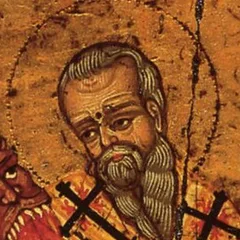 Ignatius of Antiochmartyred c. 110
Both are quoted above. Neither knows a class of believers shut out of the kingdom for a thousand years.
Polycarp: Irenaeus, Against Heresies 3.3.4. Ignatius: Martyrdom of Ignatius 1. Icons: Andreas Ritsos (1449–50); Polycarp icon; Ignatius icon, 17th c. Public domain.
The warning also applies to Lee himself
No amount of ministry activity proves that a person belongs to Christ. Matthew 7 specifically warns that public spiritual works can coexist with being unknown to Christ. Writing hundreds of Life-Study messages, preaching, building an organization, and gaining followers do not override Jesus’ words: “I never knew you.”
Lee’s own exposition of 1 John ↗ makes the test uncomfortably direct. He writes that habitual lying is a sign that someone “probably has not been born of God,” that “sinning is a sinner’s life,” and that the person who lives in sin is in “the condition of an unbeliever” (Life-Study of 1 John, msg. 26 ↗). He says whether a person is a child of God or a child of the devil is manifested by what that person practices.
In Speaking the Truth in Love ↗, former senior coworker John Ingalls ↗ recounts repeated private meetings in which elders and coworkers raised serious concerns with Lee. Lee later portrayed those men as rebels and urged believers to quarantine them. The 1978 Phone Call Between Sal Benoit and Witness Lee ↗ likewise records Lee refusing to answer a fellow elder’s questions about ministry-connected financial accountability. The Lord alone knows the final state of any person, but Christians do not need to settle that final judgment before deciding whether to follow a teacher. Jesus says that a person who refuses repeated correction is to be treated as outside Christian fellowship (Matthew 18:15–17). Lee’s doctrine and example should be rejected, not followed.
“No one who is a child of God practices sin habitually... if someone has the practice of lying continually, this is a sign that he probably has not been born of God.”
“To avoid further damage by the present turmoil, we need to practice a strict quarantine over this contagious disease.”
Scripture considered in this post
21Not everyone who says to Me, “Lord, Lord,” shall enter the kingdom of heaven, but he who does the will of My Father in heaven.
22Many will say to Me in that day, “Lord, Lord, have we not prophesied in Your name, cast out demons in Your name, and done many wonders in Your name?”
23And then I will declare to them, “I never knew you; depart from Me, you who practice lawlessness!”
Jesus gives no category for people he knows as saved but excludes temporarily. He says he never knew those who practice lawlessness.
3And this is eternal life, that they may know You, the only true God, and Jesus Christ whom You have sent.
Eternal life is knowing the Father and the Son, which makes Jesus’ words “I never knew you” decisive.
27My sheep hear My voice, and I know them, and they follow Me.
28And I give them eternal life, and they shall never perish; neither shall anyone snatch them out of My hand.
Jesus knows his sheep and gives them eternal life. This is the opposite of the verdict, “I never knew you.”
4For whatever is born of God overcomes the world. And this is the victory that has overcome the world—our faith.
5Who is he who overcomes the world, but he who believes that Jesus is the Son of God?
John identifies every person born of God through faith in Christ as an overcomer, not a small elite within one movement.
6Whoever abides in Him does not sin. Whoever sins has neither seen Him nor known Him.
7Little children, let no one deceive you. He who practices righteousness is righteous, just as He is righteous.
8He who sins is of the devil, for the devil has sinned from the beginning. For this purpose the Son of God was manifested, that He might destroy the works of the devil.
9Whoever has been born of God does not sin, for His seed remains in him; and he cannot sin, because he has been born of God.
10In this the children of God and the children of the devil are manifest: Whoever does not practice righteousness is not of God, nor is he who does not love his brother.
John ties a life’s direction to whether a profession of Christ is genuine, the opposite of a doctrine that makes persistent lawlessness irrelevant to salvation.
15“Moreover if your brother sins against you, go and tell him his fault between you and him alone. If he hears you, you have gained your brother.
16But if he will not hear, take with you one or two more, that ‘by the mouth of two or three witnesses every word may be established.’
17And if he refuses to hear them, tell it to the church. But if he refuses even to hear the church, let him be to you like a heathen and a tax collector.
Jesus gives the church a practical response to a person who persists in refusing correction: do not treat that person as a faithful brother or teacher.