
Witness Lee wrote that “every word of every book of the Bible has been breathed out by God,” and then, in the same message, that “not every word in the Bible is the word of God” (Life-Study of James, msg. 14 ↗). There he put the Epistle of James alongside the serpent’s words in Genesis 3 and Peter’s rebuke in Matthew 16: recorded by God, but not God’s word. James’s teaching on “visiting widows and orphans, keeping oneself unspotted from the world… saying, ‘If the Lord wills,’” he wrote, “may be godly, but it is not God’s word” (Life-Study of James, msg. 14 ↗). Elsewhere he said James “was somewhat off from God’s economy” (Life-Study of James, msg. 5 ↗).
The comparison doesn’t hold. The serpent and Peter are corrected inside Scripture itself; James never is. And James isn’t recording someone else’s words. It is a letter teaching the church, written by a man Paul counted among the “pillars” (Galatians 2:9). It is never corrected for a simple reason: almost nothing in his letter is his own. “Be doers of the word.” “Mercy triumphs over judgment.” “Who are you to judge another?” “Let your ‘Yes’ be ‘Yes.’” Jesus said every one of these first. If Lee held a low view of James, he held a low view of Jesus.
Lee also kept calling James God-breathed: such a book, he wrote, “is included among the holy writings, which were breathed by God, inspired by God” (Life-Study of James, msg. 14 ↗). That is having it both ways. Paul never separated God-breathed from God’s word: “All Scripture is given by inspiration of God, and is profitable for doctrine” (2 Timothy 3:16). A letter that is God-breathed but “not God’s word” is a letter no one has to obey.
This post reads James beside Jesus first, then beside Paul, who served Jesus and never corrected Him.
“In his Epistle James wrote in a godly way concerning many things: visiting widows and orphans, keeping oneself unspotted from the world, fulfilling the perfect law of freedom, saying, “If the Lord wills,” concerning the future, encouraging the believers to pray according to the example of Elijah. James’ word regarding these things may be godly, but it is not God’s word.”
Doers of the word

22But be doers of the word, and not hearers only, deceiving yourselves.
23For if anyone is a hearer of the word and not a doer, he is like a man observing his natural face in a mirror;
24for he observes himself, goes away, and immediately forgets what kind of man he was.
25But he who looks into the perfect law of liberty and continues in it, and is not a forgetful hearer but a doer of the work, this one will be blessed in what he does.
Lee singled out James 1:22. James “says that we should become doers of the word and not hearers only,” he wrote, and “James is clearly saying that we must be doers of the law” (Life-Study of James, msg. 13 ↗). He saw the obvious objection coming. Readers may say, he wrote, “James is right in saying that we should be doers of the law.” But “if we read the Bible this way, we read it according to the natural understanding, not according to the enlightenment of the Spirit” (Life-Study of James, msg. 13 ↗).
Yet “be doers of the word” was never James’s idea. Jesus closed the Sermon on the Mount with it: “whoever hears these sayings of Mine, and does them, I will liken him to a wise man who built his house on the rock” (Matthew 7:24). His last command was the same: make disciples, “teaching them to observe all things that I have commanded you” (Matthew 28:20).
A low view of James is a low view of Jesus

Of all the New Testament letters, James sounds most like the Sermon on the Mount. Put them side by side and the echoes are obvious. Paul says the same things, too.
| Jesus | James | Paul | |
|---|---|---|---|
| Doing the word | “whoever hears these sayings of Mine, and does them, I will liken him to a wise man”Matthew 7:24 | “be doers of the word, and not hearers only, deceiving yourselves”James 1:22 | “the doers of the law will be justified”Romans 2:13 |
| Saying and doing | “Not everyone who says to Me, ‘Lord, Lord,’ shall enter the kingdom of heaven, but he who does the will of My Father in heaven”Matthew 7:21 | “What does it profit, my brethren, if someone says he has faith but does not have works? Can faith save him?”James 2:14 | “who ‘will render to each one according to his deeds’: eternal life to those who by patient continuance in doing good seek for glory, honor, and immortality”Romans 2:6–7 |
| Love your neighbor | “You shall love your neighbor as yourself. On these two commandments hang all the Law and the Prophets”Matthew 22:39–40 | “If you really fulfill the royal law… ‘You shall love your neighbor as yourself,’ you do well”James 2:8 | “all the law is fulfilled in one word… ‘You shall love your neighbor as yourself’”Galatians 5:14 |
| Mercy | “Blessed are the merciful, for they shall obtain mercy”Matthew 5:7 | “judgment is without mercy to the one who has shown no mercy. Mercy triumphs over judgment”James 2:13 | “be kind to one another, tenderhearted, forgiving one another, even as God in Christ forgave you”Ephesians 4:32 |
| Judging others | “Judge not, that you be not judged. For with what judgment you judge, you will be judged”Matthew 7:1–2 | “Do not speak evil of one another, brethren… Who are you to judge another?”James 4:11–12 | “why do you judge your brother?… For we shall all stand before the judgment seat of Christ”Romans 14:10 |
| Humility | “he who humbles himself will be exalted”Matthew 23:12 | “Humble yourselves in the sight of the Lord, and He will lift you up”James 4:10 | |
| Yes and no | “let your ‘Yes’ be ‘Yes,’ and your ‘No,’ ‘No’”Matthew 5:37 | “do not swear… let your ‘Yes’ be ‘Yes,’ and your ‘No,’ ‘No’”James 5:12 | |
| The poor | “Blessed are you poor, for yours is the kingdom of God”Luke 6:20 | “Has God not chosen the poor of this world to be rich in faith and heirs of the kingdom”James 2:5 | |
| Persecutors | “bless those who curse you… pray for those who spitefully use you and persecute you”Matthew 5:44 | “Bless those who persecute you; bless and do not curse”Romans 12:14 |
Lee set Jesus aside directly, too. As a young man he was taught that “Jesus was meek and patient, so we have to follow Jesus in meekness and in patience.” Later he wrote: “Apparently, this teaching is right, but intrinsically, it is absolutely off” (High Peak, ch. 2 ↗). Jesus had said, “learn from Me, for I am gentle and lowly in heart” (Matthew 11:29).
Jesus judged by fruit

Lee’s complaint was that James “does not tell us the New Testament way to keep the perfect law of freedom,” which is “by living and walking according to the Spirit” (Life-Study of James, msg. 13 ↗). His note on James 1:26 adds that James “does not speak of Christ as our life” and “must have been very religious” (Recovery Version, James 1:26, note 1 ↗). His defenders put it more simply: James “just says to do it.” But the same is true of the Sermon on the Mount: three chapters of commands, with no mention of the indwelling Spirit. Jesus judged people by their fruit: “You will know them by their fruits… every good tree bears good fruit, but a bad tree bears bad fruit… Every tree that does not bear good fruit is cut down and thrown into the fire” (Matthew 7:16–19). “A tree is known by its fruit” (Matthew 12:33).
Even impressive spiritual activity did not count without obedience. “Many will say to Me in that day, ‘Lord, Lord, have we not prophesied in Your name, cast out demons in Your name…?’ And then I will declare to them, ‘I never knew you; depart from Me, you who practice lawlessness!’” (Matthew 7:22–23). In the parable of the two sons, the one who said “I will not,” but “afterward he regretted it and went,” is the one who did “the will of his father,” not the one who said “I go, sir,” and never went (Matthew 21:28–31). At the judgment the King says, “I was hungry and you gave Me food… naked and you clothed Me; I was sick and you visited Me” (Matthew 25:35–36). That is James’s “visit orphans and widows in their trouble” (James 1:27), nearly word for word. Lee’s own notes on that verse admit that visiting orphans and widows “is to act according to God’s loving heart,” yet say “an element of the Old Testament charges is implied” (Recovery Version, James 1:27, notes 1–2 ↗). If James wrote “under the thick cloud of Judaic concepts” (Life-Study of James, msg. 11 ↗), so did Jesus.
Even Lee granted that “James knew that we have been born of God, that God has brought us forth by the word of truth” (Life-Study of James, msg. 13 ↗). And James does not start with self-effort. He puts the implanted word first, “receive with meekness the implanted word, which is able to save your souls” (1:21), and only then says, “be doers of the word, and not hearers only” (1:22). He also says, “He gives more grace” (4:6), and “if any of you lacks wisdom, let him ask of God” (1:5). Jesus gives the same order: “He who abides in Me, and I in him, bears much fruit; for without Me you can do nothing” (John 15:5), and “If you keep My commandments, you will abide in My love” (15:10). For Jesus, abiding and obeying go together.
Some worry that James breeds legalism, and it is true that some people quote him to judge others. But visiting widows and orphans is not legalism, and James is the one who warns against judging: “Mercy triumphs over judgment” (2:13); “There is one Lawgiver, who is able to save and to destroy. Who are you to judge another?” (4:12).
Paul does not outrank Jesus
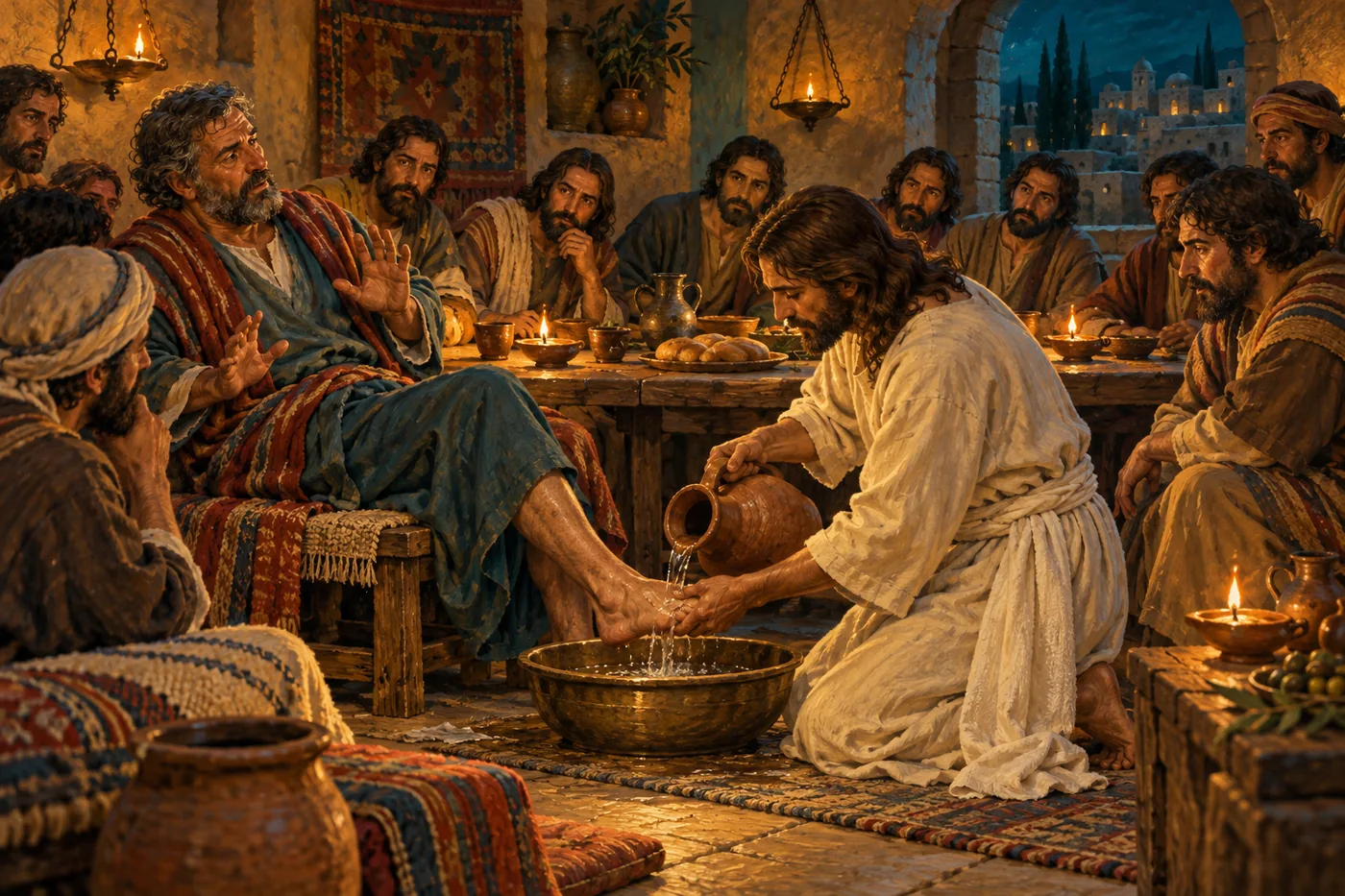
“A servant is not greater than his master,” Jesus said, “nor is he who is sent greater than he who sent him” (John 13:16). The Greek word for “he who is sent” is apostolos, apostle, and Paul introduces himself as “a bondservant of Jesus Christ, called to be an apostle” (Romans 1:1).
Paul kept pointing back to Jesus’ words. “Not I but the Lord” (1 Corinthians 7:10). “Remember the words of the Lord Jesus, that He said, ‘It is more blessed to give than to receive’” (Acts 20:35). “Imitate me, just as I also imitate Christ” (1 Corinthians 11:1). He warned against anyone who “does not consent to wholesome words, even the words of our Lord Jesus Christ” (1 Timothy 6:3). And Peter warned that some things in Paul are hard to understand, “which untaught and unstable people twist to their own destruction” (2 Peter 3:16).
That matters, because Lee measured James with a Pauline yardstick. “In contrast to James,” he wrote, “Paul was permeated, saturated, and soaked with the matters of the church” (Life-Study of James, msg. 12 ↗). And “God’s economy,” the standard James was “somewhat off” from (msg. 5 ↗), is a term Lee built on Paul’s word oikonomia: “In Greek the words ‘God’s dispensation’ in 1:4 also mean God’s household economy” (Life-Study of 1 Timothy, msg. 1 ↗). His defenders often say it outright: read Jesus through Paul. But if Paul echoes Jesus, Jesus is the standard, and James meets it. If Jesus’ words only count after they pass through Paul, then Paul is overriding Him. Read as an echo, Paul says exactly what Jesus says:
| Jesus | Paul | |
|---|---|---|
| Known by fruit | “every good tree bears good fruit, but a bad tree bears bad fruit”Matthew 7:17 | “whatever a man sows, that he will also reap… he who sows to the Spirit will of the Spirit reap everlasting life”Galatians 6:7–8 |
| Lawlessness shuts the door | “I never knew you; depart from Me, you who practice lawlessness!”Matthew 7:23 | “those who practice such things will not inherit the kingdom of God”Galatians 5:21 |
| Saying but not doing | “‘I go, sir,’ but he did not go”Matthew 21:30 | “They profess to know God, but in works they deny Him”Titus 1:16 |
| Judged by deeds | “inasmuch as you did it to one of the least of these My brethren, you did it to Me”Matthew 25:40 | “that each one may receive the things done in the body, according to what he has done, whether good or bad”2 Corinthians 5:10 |
Read Paul through Jesus, and Lee’s readings fall apart
Reading Paul as an echo of Jesus matters most with his hardest verses. Here is what Paul wrote, what Lee taught on the same point, and what Jesus said:
| Paul wrote | Lee taught | Jesus said | |
|---|---|---|---|
| Kingdom | “those who practice such things will not inherit the kingdom of God”Galatians 5:21 | the verse “is not related to a believer’s salvation”; they lose only “the coming kingdom as a reward”Life-Study of Galatians, msg. 27 ↗ | “Come, you blessed of My Father, inherit the kingdom”… “the righteous into eternal life”Matthew 25:34, 46 |
| Faith | “you stand by faith… Otherwise you also will be cut off”Romans 11:20, 22 | “once we have such a faith, we can never lose it”Life-Study of Romans, msg. 8 ↗ | some “believe for a while and in time of temptation fall away”Luke 8:13 |
| Deeds | God “will render to each one according to his deeds: eternal life to those who by patient continuance in doing good”Romans 2:6–7 | “Whatever we have done, whatever we are doing, and whatever we shall do cannot affect our salvation”Life-Study of Hebrews, msg. 46 ↗ | “those who have done good, to the resurrection of life, and those who have done evil, to the resurrection of condemnation”John 5:29 |
| Christ in me | “it is no longer I who live, but Christ lives in me”Galatians 2:20 | “Doing is something that is of ourselves, but living is by the Holy Spirit”Life-Study of James, msg. 13 ↗ | “If you keep My commandments, you will abide in My love”John 15:10 |
| The gospel | “godly sorrow produces repentance leading to salvation”2 Corinthians 7:10 | “as long as they repent and believe in Him, they will receive eternal life… Although this is the gospel, it is a low gospel”A Deeper Study of the Divine Dispensing, ch. 2 ↗ | “the kingdom of God is at hand. Repent, and believe in the gospel”Mark 1:15 |
| Who gets in | “the unrighteous will not inherit the kingdom of God… And such were some of you. But you were washed”1 Corinthians 6:9, 11 | “Those who are not overcomers will be excluded from the enjoyment of the kingdom during the millennium and will probably be punished”Life-Study of Matthew, msg. 58 ↗ | “Lord, remember me when You come into Your kingdom”… “today you will be with Me in Paradise”Luke 23:42–43 |
Lee’s readers will answer the first row with the millennium: the kingdom Paul warns about is a thousand-year reward, not salvation itself. Jesus does not allow that split. In Matthew 25 the ones told to “inherit the kingdom” (25:34) are the ones who go “into eternal life,” and the rest go “into everlasting punishment” (25:46). When the rich young ruler asked about “eternal life,” Jesus spoke of entering “the kingdom of heaven,” and the disciples asked, “Who then can be saved?” (Matthew 19:16, 23, 25). Paul uses the phrase the same way. “Flesh and blood cannot inherit the kingdom of God” is about the resurrection (1 Corinthians 15:50), and the people who “will not inherit the kingdom of God” are set against believers who were “washed… sanctified… justified” (1 Corinthians 6:9–11). Neither Jesus nor Paul has a third group: saved, but shut out of the kingdom.
The thief on the cross makes the point from the other side. He had no time to overcome anything. He admitted, “we receive the due reward of our deeds,” and turned to Jesus as King: “Lord, remember me when You come into Your kingdom.” Jesus answered, “today you will be with Me in Paradise” (Luke 23:41–43). That is Romans 4: God “justifies the ungodly” who trust Him (4:5). It is also the gospel Lee called low.
James and Paul agreed in person
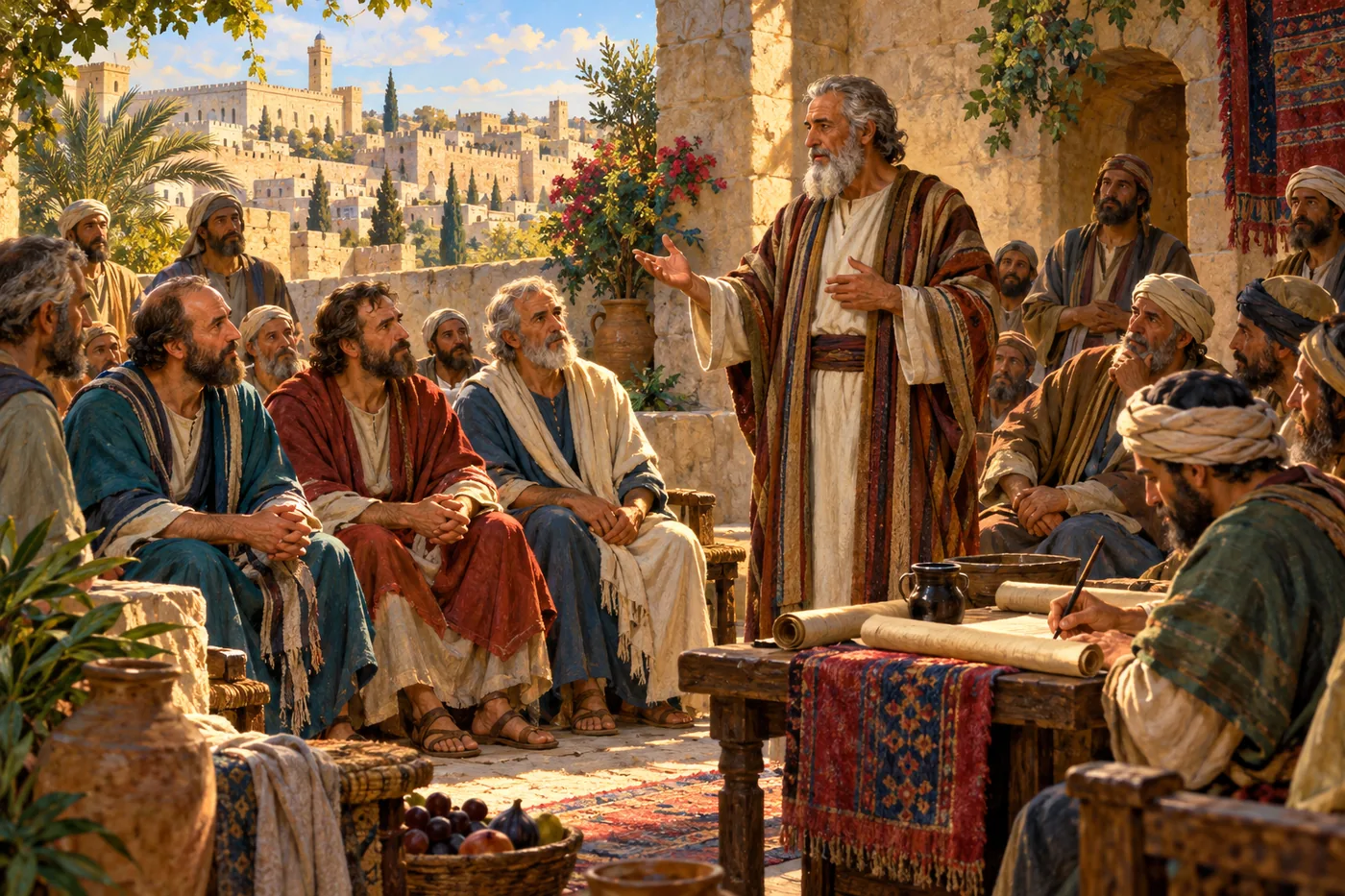
Lee’s note on James 1:26 says that James’s “spiritual sight was covered by Judaism” (Recovery Version, James 1:26, note 1 ↗). The record shows otherwise. The faith-and-works question came to a head in Jerusalem, when some insisted that Gentile believers be circumcised and keep the law of Moses (Acts 15:1, 5). James gave the ruling: “I judge that we should not trouble those from among the Gentiles who are turning to God” (15:19). The letter that went out with Paul and Barnabas said, “it seemed good to the Holy Spirit, and to us” (15:28). Paul tells the same story from his side: James, Peter, and John “perceived the grace that had been given to me” and “gave me and Barnabas the right hand of fellowship” (Galatians 2:9).
Faith that works
James’s hardest line is “a man is justified by works, and not by faith only” (2:24). Paul’s is “a man is justified by faith apart from the deeds of the law” (Romans 3:28). They are answering different questions, and Paul’s next sentence shows his: “Or is He the God of the Jews only? Is He not also the God of the Gentiles?” (3:29). The “deeds of the law” he means are the ones that marked a person out as a Jew, like circumcision. That is why he can also say, “in Christ Jesus neither circumcision nor uncircumcision avails anything, but faith working through love” (Galatians 5:6).
James’s works are something else: giving a brother or sister in need “the things which are needed for the body” (James 2:15–16). “Faith by itself, if it does not have works, is dead” (2:17). Paul says it his own way: we are “created in Christ Jesus for good works” (Ephesians 2:10).
Some of the apparent conflict comes from the word faith itself. The Greek pistis also means faithfulness and loyalty, and Paul describes his calling as bringing about “obedience to the faith among all nations” (Romans 1:5). If faith means bowing the knee to Jesus as Lord, James’s question answers itself: how can anyone claim that allegiance and ignore what He says? Jesus asked the same thing: “why do you call Me ‘Lord, Lord,’ and not do the things which I say?” (Luke 6:46). Chris White, a Bible teacher and filmmaker, explains this in the short video below. For the word itself, see this Greek word study on pistis ↗, which argues it meant covenant loyalty, not just belief.
What about Luther?
Lee’s defenders like to point out that Luther called James “an epistle of straw,” and that Lee was kinder: he said Luther was “both unfair and wrong” (Life-Study of James, msg. 3 ↗). But respecting Luther has never meant following him on everything, and most Christians don’t. Catholics, the Orthodox, and Protestants, Calvin among them, all kept James as Scripture. Luther also tended to read the Sermon on the Mount as law that shows us we can’t keep it, not as a call to keep it. Jesus ended that sermon the other way: “everyone who hears these sayings of Mine, and does not do them, will be like a foolish man who built his house on the sand” (Matthew 7:26). Chris White covers this in a short video, Luther vs Jesus: Did Jesus Mean For Us to Obey Him ↗.
For fifteen centuries before Luther, Christians did not read it that way. The earliest believers took the Sermon on the Mount as commands to obey. The Didache, a teaching manual from around AD 100, calls them “the way of life”: “Bless those who curse you, and pray for your enemies… love those who hate you” (Didache 1 ↗). Polycarp, who learned from the apostle John, wrote that God “will raise us up also, if we do His will, and walk in His commandments,” and then quoted “what the Lord said in His teaching: Judge not, that you be not judged… be merciful, that you may obtain mercy” (To the Philippians 2 ↗). If Luther was right, the Christians who learned the faith from the apostles misread Jesus, and no one noticed for fifteen hundred years.
Luther got graver things wrong, too. In On the Jews and Their Lies (1543) he urged that synagogues be burned and Jewish homes destroyed. Lutherans themselves have repudiated those writings; the Evangelical Lutheran Church in America did so formally in 1994. A gifted teacher can still be badly wrong, and both Luther and Lee have to answer to Jesus’ own words.
Scripture that corrects
Lee called reading James this way “the natural understanding” (Life-Study of James, msg. 13 ↗). But correction is one of the reasons Scripture was given: “All Scripture is given by inspiration of God, and is profitable for doctrine, for reproof, for correction, for instruction in righteousness, that the man of God may be complete, thoroughly equipped for every good work” (2 Timothy 3:16–17). Paul told Timothy to “convince, rebuke, exhort, with all longsuffering and teaching” (4:2). Jesus tied love to obedience: “He who has My commandments and keeps them, it is he who loves Me” (John 14:21). John was blunter: “He who says, ‘I know Him,’ and does not keep His commandments, is a liar” (1 John 2:4). And James describes the wisdom from above as “first pure, then peaceable, gentle, willing to yield, full of mercy and good fruits, without partiality and without hypocrisy” (3:17).
James wasn’t offering a lesser, human wisdom. Jesus taught it, Paul taught it, and the apostles in Jerusalem recognized it when they wrote, “it seemed good to the Holy Spirit, and to us” (Acts 15:28).
Read more: Witness Lee and the plain meaning of Scripture →