
Every Christian tradition has had to answer the warnings in Hebrews 6 and 10. What happens to someone who once confessed Christ, tasted the heavenly gift, and then walked away? Reformed Christians answer that true faith perseveres, so those who finally abandon Christ show that they never truly belonged to him: “They went out from us, but they were not of us” (1 John 2:19). Catholics, the Orthodox, and Arminians answer that a believer can fall away and be lost unless he is restored through repentance. The traditions disagree about why, but they agree on the outcome: someone who walks away from Christ and never returns is not saved in the end.
Witness Lee rejected both answers by name. The Arminians, he said, “misuse these portions of the Word,” and the Calvinist reading, that the people who fall away were false Christians, is “ridiculous” (Life-Study of Hebrews, msg. 21 ↗). His alternative was a third answer: the one who falls away remains eternally saved, and the warnings describe only a reward or a punishment in the coming kingdom.
That is not a side issue. If anyone who once professed faith is eternally secure no matter what follows, then the warnings that Scripture gives to call the wandering back are aimed somewhere else, and someone who has abandoned Christ can be assured that all is well. So here are Lee’s own words, side by side with the passages they answer.
“The Calvinists, unable to reconcile these portions of the Word with their teaching, say that the persons mentioned there as being tasters of the heavenly gift and partakers of the Holy Spirit are false Christians. But it is ridiculous to say this… This matter of prize or punishment in the kingdom is the bridge between Calvinism and Arminianism.”
Lee vs. Scripture, side by side
Four of Lee’s statements, each beside the passage it answers. The sections that follow take them one at a time.
| Witness Lee | Scripture |
|---|---|
| “…the believers can never be burned”Life-Study of Hebrews, message 30 | “…rejected and near to being cursed, whose end is to be burned”Hebrews 6:8 |
| “…ruin, which is not eternal perdition but punishment”Life-Study of Hebrews, message 44 | “…we are not of those who draw back to perdition”Hebrews 10:39 |
| “…whatever we shall do cannot affect our salvation”Life-Study of Hebrews, message 46 | “…partakers of Christ if we hold the beginning of our confidence steadfast to the end”Hebrews 3:14 |
| “Although we may try not to believe, we can never succeed”Life-Study of Romans, message 8 | “…who believe for a while and in time of temptation fall away”Luke 8:13 |
Hebrews 6: can the land be burned?

Lee does not soften what Hebrews describes. He agrees that the people in Hebrews 6 are genuine Christians, and that “fallen away” means the Hebrew believers “deviating from the pure Christian faith by returning to their old, traditional, Judaistic religion.” He adds, “In principle, this can be applied to any Christians who fall away from the right track of God’s way.” Yet, he says, “the believers, once saved, can never be a real curse,” and “the believers can never be burned” (Life-Study of Hebrews, msg. 30 ↗).
The chapter ends with an image: “If it bears thorns and briers, it is rejected and near to being cursed, whose end is to be burned” (Hebrews 6:8). Lee answers that “the earth can never be burned, but what it grows may be burned.” The writer makes no such distinction. In verse 8 one subject is “rejected,” “near to being cursed,” and bound for burning; in Greek the word “whose” (ἧς) is singular and points back to the land, not to the thorns. Lee stops at “near the curse” (Life-Study of Hebrews, msg. 30 ↗). The writer names the end. And his next words show which side of the line he means: “But, beloved, we are confident of better things concerning you, yes, things that accompany salvation” (6:9). The alternative to verse 8 is salvation, not a better reward.
Lee supports his distinction from 1 Corinthians 3: “Whatever they grow as wood, hay, and stubble will be burned (1 Cor. 3:9, 12).” But Paul is describing builders such as himself and Apollos, working on the one foundation, Christ (1 Corinthians 3:5–11). What burns is their work, tested on one Day, and the builder “will be saved, yet so as through fire” (3:15). There is no outer darkness and no period of punishment, and two verses later Paul names a different outcome: “If anyone defiles the temple of God, God will destroy him” (3:17). Hebrews 6 does not describe builders with poor materials. It describes people who “crucify again for themselves the Son of God.”
Hebrews 10: perdition, or punishment?
Hebrews 10 warns about anyone who has “trampled the Son of God underfoot, counted the blood of the covenant by which he was sanctified a common thing, and insulted the Spirit of grace” (Hebrews 10:29). Lee agrees that this describes Hebrew believers returning to Judaism. But the ruin they shrink back to, he says, “is not eternal perdition but punishment by the living God” (Life-Study of Hebrews, msg. 44 ↗).
For the one who sins willfully after receiving the knowledge of the truth, “there no longer remains a sacrifice for sins, but a certain fearful expectation of judgment, and fiery indignation which will devour the adversaries” (Hebrews 10:26–27). The writer compares this to the death penalty under Moses and calls it “much worse punishment” (10:28–29). Then he sets out two outcomes: “But we are not of those who draw back to perdition, but of those who believe to the saving of the soul” (10:39).
The word translated “perdition” is apōleia. Jesus uses it for the broad way “that leads to destruction” (Matthew 7:13). Peter uses it for “the day of judgment and perdition of ungodly men” (2 Peter 3:7). Paul uses it for the enemies of the cross, “whose end is destruction” (Philippians 3:19). Hebrews uses it for those who draw back. Lee says that this drawing back leads to “ruin, which is not eternal perdition” (Life-Study of Hebrews, msg. 44 ↗). The writer contrasts drawing back with “the saving of the soul”; Lee places both inside salvation.
“For the Hebrew believers to shrink back to Judaism was to shrink back to ruin, which is not eternal perdition but punishment by the living God.”
“Cannot affect our salvation”
Behind both readings is Lee’s view of faith itself. Faith, he says, is “a reaction caused by a divine infusion,” and “once we have such a faith, we can never lose it… Although we may try not to believe, we can never succeed” (Life-Study of Romans, msg. 8 ↗). And in his Hebrews commentary he puts it in one sentence: “Whatever we have done, whatever we are doing, and whatever we shall do cannot affect our salvation” (Life-Study of Hebrews, msg. 46 ↗). In Lee’s system, a Christian who renounces Christ and returns to the old religion remains eternally saved. The worst that awaits him is a period of punishment.
The rest of the letter speaks the same way. “We have become partakers of Christ if we hold the beginning of our confidence steadfast to the end” (Hebrews 3:14). Christ “became the author of eternal salvation to all who obey Him” (Hebrews 5:9). Lee cites Hebrews 5:9 for an “eternal salvation” that is “eternally secured” (Life-Study of Hebrews, msg. 46 ↗), but the verse itself ties that salvation to those who obey him. Jesus describes people “who believe for a while and in time of temptation fall away” (Luke 8:13), and Hebrews warns against “an evil heart of unbelief in departing from the living God” (3:12).
“Once we have such a faith, we can never lose it. It is deeper than our blood, for it has been infused into us and constituted into our being. Although we may try not to believe, we can never succeed.”
Four answers to Hebrews 6
Set beside the historic traditions, Lee’s answer stands alone. The Reformed, Catholic, Orthodox, and Arminian answers disagree sharply about grace, assurance, and the nature of faith. But none of them tells someone who has abandoned Christ, and who dies that way, that he is saved.
Lee’s answer is closest to the modern Free Grace movement, which holds that eternal life is secured by faith at one point in time whatever follows, and reads the warnings of Hebrews as warnings about rewards. The resemblance has a history. Lee’s teaching on kingdom reward and punishment came to him through Watchman Nee from the Victorian teacher Robert Govett, whom the Grace Evangelical Society ↗, the leading Free Grace organization, describes as supporting “many Free Grace ideas.”
Reformed
- No. True faith perseveres; those who finally fall away were never truly His.1 John 2:19; Westminster Confession 17
Catholic and Orthodox
- No, unless restored through repentance before death.Catechism of the Catholic Church 1861
Arminian and Wesleyan
- No. True believers can “persevere and die” in grievous sin, “and therefore finally to fall away and to perish.”The Opinions of the Remonstrants (1618), Article 5
Witness Lee
- Yes. Still eternally saved; punished in the kingdom age.Life-Study of Hebrews, messages 21, 30, 44
The first three disagree about why. Only Lee’s answer, shared with the modern Free Grace movement, says the apostate is saved in the end.
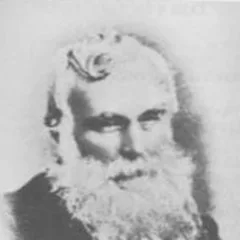 Robert Govett1813–1901 · England
 Watchman Nee1903–1972 · China
 Witness Lee1905–1997
The Grace Evangelical Society, the leading Free Grace organization, describes Govett as supporting “many Free Grace ideas.”
Photos: Govett and Nee, public domain (Wikimedia Commons); Lee, via witnesslee.wordpress.com.
Lee’s strongest texts

Lee grounds his view in Jesus’ promise: “My sheep hear My voice, and I know them, and they follow Me. And I give them eternal life, and they shall never perish; neither shall anyone snatch them out of My hand” (John 10:27–28). The promise is real, and Christians of every tradition rest on it. But it is a promise to sheep who keep following him. If you stop following, you are not his sheep. The same Jesus says, “If anyone does not abide in Me, he is cast out as a branch and is withered; and they gather them and throw them into the fire, and they are burned” (John 15:6). Paul speaks the same way to Gentile believers: “You stand by faith. Do not be haughty, but fear… Otherwise you also will be cut off” (Romans 11:20–22). John 10 promises that no one can snatch Christ’s sheep away. It does not promise eternal life to someone who stops following.
Lee also appeals to Ephesians 2:8–9: “By grace you have been saved through faith… not of works.” Every historic tradition affirms that salvation is a gift of grace, received by faith and not earned. The question is not whether faith saves but whether a faith that has been abandoned still does. Scripture describes saving faith as faith that continues. Christ reconciled believers “to present you holy, and blameless, and above reproach in His sight—if indeed you continue in the faith, grounded and steadfast, and are not moved away from the hope of the gospel” (Colossians 1:22–23). “He who endures to the end shall be saved” (Matthew 24:13).
Lee narrows the faith that saves in another way too. “In this age of grace, God has given us one, unique commandment — to believe in Jesus,” he writes. “God does not require us to keep any commandment other than this” (Life-Study of Romans, Message 2 ↗). In context he is contrasting faith with the law of Moses, and faith is indeed how anyone is saved. But Scripture never sets believing against obeying Christ. Jesus said, “If you love Me, keep My commandments” (John 14:15), and sent the apostles out “teaching them to observe all things that I have commanded you” (Matthew 28:20). John joins believing and obeying in one command: “that we should believe on the name of His Son Jesus Christ and love one another… Now he who keeps His commandments abides in Him” (1 John 3:23–24). Scripture treats refusing to obey Christ as unbelief, with the same end: “he who does not believe the Son shall not see life, but the wrath of God abides on him” (John 3:36). In Greek both are present participles, literally “the one believing” and “the one disobeying”: they describe an ongoing way of life, not a single moment. And Christ will punish “those who do not obey the gospel of our Lord Jesus Christ” with “everlasting destruction” (2 Thessalonians 1:8–9).
Behind all of this is a misunderstanding of grace itself. For Lee, grace secures eternal life whatever it does or does not produce: “whatever we have done, whatever we are doing, and whatever we shall do cannot affect our salvation” (Life-Study of Hebrews, msg. 46 ↗). How a believer lives decides only a reward. Paul describes a different grace: “For the grace of God that brings salvation has appeared to all men, teaching us that, denying ungodliness and worldly lusts, we should live soberly, righteously, and godly in the present age” (Titus 2:11–12). The grace that saves is the same grace that trains. Christ “gave Himself for us, that He might redeem us from every lawless deed and purify for Himself His own special people, zealous for good works” (Titus 2:14). Lee often spoke of grace as God’s life at work in believers, but in his system that work is optional for eternity: a believer can resist it all the way to renouncing Christ and still be saved. Paul had already answered that idea: “Shall we continue in sin that grace may abound? Certainly not!” (Romans 6:1–2).
Where the outcome cannot be relabeled

Lee’s system survives these warnings by relabeling the outcome. When a passage makes salvation depend on continuing, “saved” becomes a kingdom reward, “perdition” becomes punishment, and “burned” applies only to works. The clearest test, then, is the passages where the outcome cannot be relabeled: eternal life itself, the Book of Life, or an end worse than never having believed.
Paul reminds the Corinthians of the gospel “by which also you are saved, if you hold fast that word which I preached to you—unless you believed in vain” (1 Corinthians 15:2). The salvation here is the gospel’s own, and he defines it in the next lines: “that Christ died for our sins… and that He was buried, and that He rose again the third day” (15:3–4). To the Galatians he writes that “he who sows to the Spirit will of the Spirit reap everlasting life,” and “in due season we shall reap if we do not lose heart” (Galatians 6:8–9).
John says the same. “If what you heard from the beginning abides in you, you also will abide in the Son and in the Father. And this is the promise that He has promised us—eternal life” (1 John 2:24–25). Jude tells believers, “keep yourselves in the love of God, looking for the mercy of our Lord Jesus Christ unto eternal life” (Jude 21). In Revelation, Christ promises the one who overcomes, “I will not blot out his name from the Book of Life” (Revelation 3:5), and the end of the book explains what that book decides: “anyone not found written in the Book of Life was cast into the lake of fire” (Revelation 20:15).
Peter describes people who “have escaped the pollutions of the world through the knowledge of the Lord and Savior Jesus Christ” and then are “again entangled in them and overcome.” For them, “the latter end is worse for them than the beginning. For it would have been better for them not to have known the way of righteousness” (2 Peter 2:20–21). In Lee’s system the opposite would be true: a believer who falls back still ends with eternal life, which is far better than never knowing Christ at all.
Jesus himself distinguishes believing for a while from the faith that saves. In the parable of the sower, the devil takes the word from some “lest they should believe and be saved.” Others “believe for a while and in time of temptation fall away.” Only the good ground, those who “keep it and bear fruit with patience,” are held out as the ones who receive the word to the end (Luke 8:12–15).
- “If you hold fast that word which I preached to you”Outcome: “you are saved”1 Corinthians 15:2
- “If what you heard from the beginning abides in you”Outcome: “eternal life”1 John 2:24–25
- “If we do not lose heart”Outcome: “everlasting life”Galatians 6:8–9
- “If indeed you continue in the faith”Outcome: presented “holy, and blameless, and above reproach”Colossians 1:22–23
- “He who overcomes”Outcome: his name not blotted out of the Book of LifeRevelation 3:5; 20:15
- “To turn from the holy commandment delivered to them”Outcome: “the latter end is worse for them than the beginning”2 Peter 2:20–21
None of these outcomes is a reward added on top of salvation. Each one is salvation itself.
What the early church taught

If you want to understand what Jesus and the apostles meant, ask the people closest to them. Polycarp, according to Irenaeus, was a disciple of the apostle John, and by ancient tradition so was Ignatius. Imagine being able to ask John what Jesus meant. These Christians also spoke the Greek of the New Testament as their own language. Lee, by his own account, worked from “dictionaries, lexicons, and concordances” (Elders’ Training, Book 4, ch. 11 ↗).
The Christians closest to the apostles did not know Lee’s third answer. They warned believers, not outsiders, that a faith abandoned before the end would not save them.
The Didache, a church manual from the late first or early second century, tells believers to gather often, “for the whole time of your faith shall not profit you except ye be found perfect at the last time” (The Didache, Chapter 16 ↗).
Around AD 110, on his way to martyrdom, Ignatius of Antioch ↗ wrote to the church at Ephesus that Christians “shall be recognised by their conduct. For there is not now a demand for mere profession, but that a man be found continuing in the power of faith to the end” (Epistle to the Ephesians, Chapter 14 ↗). Two chapters later he warns about false teaching: anyone who “corrupts by wicked doctrine the faith of God, for which Jesus Christ was crucified… shall go away into everlasting fire, and so shall every one that hearkens unto him” (Epistle to the Ephesians, Chapter 16 ↗). He is writing to a church, about people inside it.
Justin Martyr ↗, writing around AD 155, addressed the very case Lee says Hebrews describes: believers who return from Christ to the law. Those who keep the law while still confessing Christ, Justin thought, would probably be saved. But those who “have confessed and known this man to be Christ, yet who have gone back from some cause to the legal dispensation, and have denied that this man is Christ, and have repented not before death, shall by no means be saved” (Dialogue with Trypho, Chapter 47 ↗). Lee says the same people are eternally saved and face only punishment.
Irenaeus, around AD 180, passes on teaching he heard from an elder “who had heard it from those who had seen the apostles” (Against Heresies, Book IV, Chapter 27 ↗). Christians, he says, should not be proud, “but ought ourselves to fear, lest perchance, after [we have come to] the knowledge of Christ, if we do things displeasing to God, we obtain no further forgiveness of sins, but be shut out from His kingdom.” He then cites Paul’s warning in Romans 11: if God did not spare the natural branches, he may not spare you. Irenaeus does not mean a thousand-year exclusion; elsewhere he places outer darkness beside “eternal fire” (Against Heresies 4.40).
Justin also describes how converts were received. Those who “are persuaded and believe that what we teach and say is true, and undertake to be able to live accordingly,” were taught to pray and fast for the forgiveness of their sins before baptism (First Apology ↗ 61). A mid-second-century sermon urges repentance “while we are in this world,” because after leaving it, “no further power of confessing or repenting will there belong to us” (2 Clement 8 ↗). For these writers, faith that saves is faith that continues, and the time to return is now. Set beside them, Lee’s reading of these warnings has no early witness. It comes from Victorian teachers like Robert Govett, eighteen centuries after Christ.
“Such as have confessed and known this man to be Christ, yet who have gone back from some cause to the legal dispensation, and have denied that this man is Christ, and have repented not before death, shall by no means be saved.”
“If, then, those who do this as respects the flesh have suffered death, how much more shall this be the case with any one who corrupts by wicked doctrine the faith of God, for which Jesus Christ was crucified! Such an one becoming defiled [in this way], shall go away into everlasting fire, and so shall every one that hearkens unto him.”
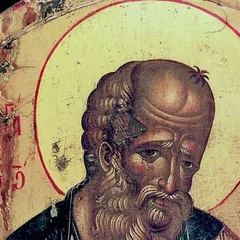 The apostle Johndisciple of Jesus
 Polycarp of Smyrnac. 69–155
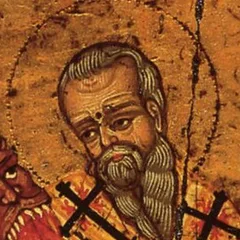 Ignatius of Antiochmartyred c. 110
Polycarp: Irenaeus, Against Heresies 3.3.4. Ignatius: Martyrdom of Ignatius 1. Icons: Andreas Ritsos (1449–50); Polycarp icon; Ignatius icon, 17th c. Public domain.
The first Christian writers
- “The whole time of your faith shall not profit you except ye be found perfect at the last time”Didache 16 · late 1st or early 2nd century
- “Not now a demand for mere profession, but that a man be found continuing in the power of faith to the end”Ignatius, To the Ephesians 14 · about 110
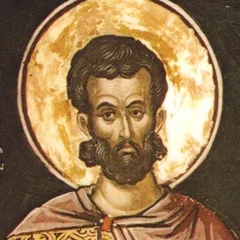 Those who confessed Christ, went back, denied him, and did not repent “shall by no means be saved”Justin Martyr, Dialogue 47 · about 155
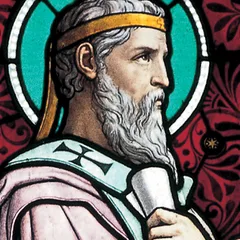 After the knowledge of Christ, we may “obtain no further forgiveness of sins”Irenaeus, Against Heresies 4.27 · about 180
Witness Lee
- Shrinking back to Judaism leads to “ruin, which is not eternal perdition but punishment”Life-Study of Hebrews, message 44 · twentieth century
None of these writers says that someone who abandons Christ and dies unrepentant is still saved.
Who were the Nicolaitans?
The early church settles one more question, and it brings this whole subject into focus. In Revelation, Christ names a group whose deeds and teaching He says He hates: the Nicolaitans. Lee made them a centerpiece of his case against other churches. The earliest Christians remembered them for something else, and it is the very question this article is about.
Christ tells the church in Ephesus, “you hate the deeds of the Nicolaitans, which I also hate” (Revelation 2:6). Lee, following Watchman Nee, explained the name from two Greek words, niko, “conquer,” and laos, “the people”: “So Nikolaos means conquering the common people, climbing above the laity.” The Nicolaitans, he concluded, stood for “the so-called clergy and laity,” a hierarchy “followed and established by Catholicism and Protestantism” (Life-Study of Revelation, msg. 10 ↗).
The earliest Christian writers did not explain the name from Greek roots. They traced it to a man. Irenaeus, around AD 180, says “the Nicolaitanes are the followers of that Nicolas who was one of the seven first ordained to the diaconate by the apostles” (Against Heresies, Book I, Chapter 26 ↗), the Nicolas of Acts 6:5, and Hippolytus says the same. And in Pergamos, Christ sets the Nicolaitans right beside Balaam: “you have there those who hold the doctrine of Balaam, who taught Balak to put a stumbling block before the children of Israel, to eat things sacrificed to idols, and to commit sexual immorality. Thus you also have those who hold the doctrine of the Nicolaitans” (Revelation 2:14–15).
Those same writers say what the Nicolaitans taught. Irenaeus says they “lead lives of unrestrained indulgence” (Against Heresies, Book I, Chapter 26 ↗), and that Revelation shows them “teaching that it is a matter of indifference to practise adultery, and to eat things sacrificed to idols.” Hippolytus, in the early third century, says Nicolas “departed from correct doctrine, and was in the habit of inculcating indifferency of both life and food” (Refutation of All Heresies, Book VII, Chapter 24 ↗). Clement of Alexandria ↗ describes Nicolaitans who, “abandoning themselves to pleasure like goats,” lead “a life of self-indulgence” (Stromata, Book II, Chapter 20 ↗). For the early church, the Nicolaitan error was not a clergy. It was the claim that how a Christian lives makes no difference to God.
Here Lee goes further than any of the historic traditions. He does not only say that salvation is by grace. He says that even a Christian who renounces Christ and returns to the old religion loses nothing eternal: that ruin “is not eternal perdition but punishment by the living God” (Life-Study of Hebrews, msg. 44 ↗). In his system the Christian who indulges in sin, even the one who renounces Christ, loses a reward, never eternal life. That is what the early church condemned in the Nicolaitans: teaching that sin costs a Christian nothing before God. Jude warned of “ungodly men, who turn the grace of our God into lewdness” (Jude 4). And Christ’s word to those who held the Nicolaitan teaching was not “you will lose a reward.” It was “Repent, or else I will come to you quickly and will fight against them with the sword of My mouth” (Revelation 2:16).
Revelation and the early church
- Followers of Nicolas, “one of the seven first ordained to the diaconate”Irenaeus, Against Heresies 1.26.3; Acts 6:5
- Set beside Balaam: idol food and sexual immoralityRevelation 2:14–15
- “Lives of unrestrained indulgence… a matter of indifference to practise adultery”Irenaeus, Against Heresies 1.26.3 · about 180
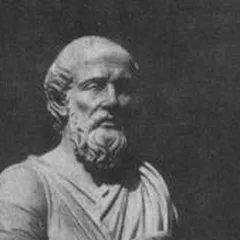 “Inculcating indifferency of both life and food”Hippolytus, Refutation 7.24 · early third century
Witness Lee
- “Conquering the common people, climbing above the laity”: “the so-called clergy and laity”Life-Study of Revelation, message 10
Lee aimed the warning at other churches’ clergy. The early church aimed it at teaching that sin costs a Christian nothing before God.
Why the warnings were written

The warnings in Hebrews were not written to make faithful Christians anxious. The writer says, “we are confident of better things concerning you, yes, things that accompany salvation” (Hebrews 6:9). They were written to call back people who were drifting, while there was still time: “exhort one another daily, while it is called ‘Today,’ lest any of you be hardened through the deceitfulness of sin” (Hebrews 3:13).
That is why the stakes matter. If someone you love has walked away from Christ, Lee’s teaching says that he is safe and will only be disciplined later. Scripture says the opposite, and it also says what to do: “Brethren, if anyone among you wanders from the truth, and someone turns him back, let him know that he who turns a sinner from the error of his way will save a soul from death and cover a multitude of sins” (James 5:19–20). And to anyone who turns back, Jesus makes a promise: “the one who comes to Me I will by no means cast out” (John 6:37).
Scripture considered in this post
4For it is impossible for those who were once enlightened, and have tasted the heavenly gift, and have become partakers of the Holy Spirit,
5and have tasted the good word of God and the powers of the age to come,
6if they fall away, to renew them again to repentance, since they crucify again for themselves the Son of God, and put Him to an open shame.
7For the earth which drinks in the rain that often comes upon it, and bears herbs useful for those by whom it is cultivated, receives blessing from God;
8but if it bears thorns and briers, it is rejected and near to being cursed, whose end is to be burned.
Lee agrees these are genuine Christians who fall away, but says “the believers can never be burned.” The writer says the land’s end is to be burned.
26For if we sin willfully after we have received the knowledge of the truth, there no longer remains a sacrifice for sins,
27but a certain fearful expectation of judgment, and fiery indignation which will devour the adversaries.
28Anyone who has rejected Moses’ law dies without mercy on the testimony of two or three witnesses.
29Of how much worse punishment, do you suppose, will he be thought worthy who has trampled the Son of God underfoot, counted the blood of the covenant by which he was sanctified a common thing, and insulted the Spirit of grace?
30For we know Him who said, “Vengeance is Mine, I will repay,” says the Lord. And again, “The Lord will judge His people.”
31It is a fearful thing to fall into the hands of the living God.
The judgment described here is worse than death without mercy, and the fire devours the adversaries. Lee calls it punishment within salvation.
38Now the just shall live by faith; But if anyone draws back, My soul has no pleasure in him.”
39But we are not of those who draw back to perdition, but of those who believe to the saving of the soul.
The writer sets drawing back to perdition against believing to the saving of the soul. Lee says this drawing back leads to “ruin, which is not eternal perdition.”
5“I am the vine, you are the branches. He who abides in Me, and I in him, bears much fruit; for without Me you can do nothing.
6If anyone does not abide in Me, he is cast out as a branch and is withered; and they gather them and throw them into the fire, and they are burned.
The Jesus who promises that no one will snatch his sheep away also warns that the branch that does not abide is cast out and burned.
21And you, who once were alienated and enemies in your mind by wicked works, yet now He has reconciled
22in the body of His flesh through death, to present you holy, and blameless, and above reproach in His sight—
23if indeed you continue in the faith, grounded and steadfast, and are not moved away from the hope of the gospel which you heard, which was preached to every creature under heaven, of which I, Paul, became a minister.
Paul ties the final presentation of believers to their continuing in the faith.
19Brethren, if anyone among you wanders from the truth, and someone turns him back,
20let him know that he who turns a sinner from the error of his way will save a soul from death and cover a multitude of sins.
James treats a believer’s wandering from the truth as a danger of death, and bringing him back as saving his soul.