Witness Lee taught that God became man so that man might become God, and he argued for it from ordinary birth. Man begets man and a dog begets a dog, so “in regeneration God begets gods” (A Defense of Seventeen Quotations ↗). The analogy is memorable. It is also where the teaching goes wrong.
Believers really are “born… of God” (John 1:13) and “partakers of the divine nature” (2 Peter 1:4). Regeneration gives real life, not merely a new legal status. The question is whether that new life makes a creature God.
Lee’s argument in his own words
Lee could not decide what his own analogy proved. Read his statements side by side: first he refuses the conclusion, then he states it, then he states it more strongly and suggests a softer word “for utterance” (A Defense of Seventeen Quotations ↗). The wording changed to avoid offense. The belief did not.
“Whatever is begotten of a dog is a dog. The point here is that a certain kind of life will always beget that kind of life. I would not say that because we have been begotten of God, we are God.”
“What is begotten of man is man, and what is begotten of God must be God. We are born of God; hence, in this sense we are God.”
“Thus, in regeneration God begets gods. Man begets man. Goats beget goats… We all who are born of God are gods. But for utterance, due to the theological misunderstanding, it is better to say that we are God-men in the divine species.”
The analogy proves too much

Lee’s formula was that believers are God “in nature and in life, but not in the Godhead” (A Defense of Seventeen Quotations ↗). Apply that to his own analogy. Nobody says a puppy is a dog in nature, but not in dog-hood. A puppy is simply a dog. If the analogy holds, a child of God shares everything that makes God God: uncreated, eternal, and worthy of worship.
Lee knew that was false. Right after “we are God,” he adds that believers “cannot be worshipped by others,” and he calls claiming God’s deity and worship “a top blasphemy” (A Defense of Seventeen Quotations ↗). So he abandons his analogy at the one point that matters. An argument that has to be abandoned at the decisive point proves nothing.
He explained the Godhead as God’s “position or rank” (A Defense of Seventeen Quotations ↗). But being God is not a rank God holds. It is what He is: “Before Me there was no God formed, nor shall there be after Me” (Isaiah 43:10). A God who begets gods would be forming gods after Him.
“To say that we are mingled with God, though, does not mean that we become God in His deity and that we are qualified to be the object of people’s worship. This is a top blasphemy and is utterly heretical.”
“Because we are children of God, we are God in nature and in life, but not in the Godhead, that is, not in God’s position or rank.”
Lee’s analogy
- A dog begets a dogFully a dog. Nothing is held back.
- So God begets godsLee: “God in nature and in life, but not in the Godhead.”The Organic Union in God’s Relationship with Man, p. 27
- The analogy stops halfwayLee denies that believers share God’s person or can be worshipped.A Deeper Study of the Divine Dispensing, ch. 3
Scripture
- The only begotten SonSon by nature, eternally God.John 1:18
- Born of GodReal new life, not just a new status.John 1:12–13; 2 Peter 1:4
- Adopted as sonsSons by grace, not by nature.Galatians 4:5
- “We shall be like Him”Like Him, not Him.1 John 3:2
Sons by nature, sons by grace

There are two ways to be a son. A son by nature is the same kind of being as his father, as a puppy is a dog. An adopted son is a son by grace: he truly receives the name, the love, and the inheritance, but all of it is given.
Scripture keeps the two apart. Jesus is “the only begotten Son” (John 1:18). Believers are given “the right to become children of God” (John 1:12) and “receive the adoption as sons” (Galatians 4:5). Birth means the life is real. Adoption means it is not ours by nature. We are “joint heirs with Christ” (Romans 8:17): heirs with the Son by nature, never in His place. Think of iron in a fire. It truly glows with the fire’s heat, yet it remains iron, and the glow belongs to the fire.
The word Paul chose matters. It is huiothesia, from huios, “son,” and thesis, “placing”: the placing of someone as a son. The standard Greek lexicons define it as adoption. Liddell and Scott give “adoption as a son,” and Abbott-Smith gives “adoption of a son (or daughter)” (υἱοθεσία (huiothesia) in the Greek lexicons ↗), notes that the word is frequent in inscriptions, and applies it to God’s relation with Christians in Romans 8:15, Galatians 4:5, and Ephesians 1:5. W. E. Vine ↗, whose dictionary Lee himself quoted, says it “signifies the place and condition of a son given to one to whom it does not naturally belong,” and on Galatians 4:5 calls it “sonship bestowed in distinction from a relationship consequent merely upon birth” (Vine’s Expository Dictionary of New Testament Words, “Adoption” ↗). J. N. Darby, whose translation Lee often cited, renders it “adoption” in Romans 8:15 and Ephesians 1:5. Even Living Stream Ministry’s own journal concedes that before the New Testament the word “does have the meaning of adoption,” and that most English versions translate it “adoption as sons.”
Lee’s Recovery Version sets all of this aside. In the four places Paul uses the word of believers, it reads “sonship” instead (Galatians 4:5; Romans 8:15, 23; Ephesians 1:5). Yet by Lee’s own account, “We did not study Greek, yet we had dictionaries, lexicons, and concordances to help us” (Elders’ Training, Book 4, ch. 11 ↗). Those lexicons say adoption. His commentary on Ephesians 1:5 shows why he departed from them: “We are neither God’s sons-in-law nor His adopted sons” (Life-Study of Ephesians, msg. 19 ↗). This was not a slip in translation. Adoption is the one thing his analogy cannot allow, so Lee took it out of Paul’s word.
So when John draws the conclusion from being born of God, he does not say “we are God.” He says, “now we are children of God… we shall be like Him” (1 John 3:2). At his most careful, Lee said the same: “if you say that you are like God in your being (1 John 3:2), having His life and nature, this is the truth according to the divine revelation” (A Defense of Seventeen Quotations ↗). Like God is scriptural. God is not. Lee’s analogy keeps the birth and drops the adoption.
“Verse 5 says that God the Father predestinated us unto sonship. If the Father’s life has not come into us, how can we be His sons? Impossible! Sonship requires that we be saturated with the Father’s life. We are neither God’s sons-in-law nor His adopted sons; we are sons in God’s life and nature.”
“In expounding any verse, we would go back directly to the Greek text. We did not study Greek, yet we had dictionaries, lexicons, and concordances to help us.”
What the authorities say
- Liddell–Scott“adoption as a son”
- Abbott-Smith“adoption of a son (or daughter),” frequent in inscriptions
- W. E. Vine, quoted by Lee“given to one to whom it does not naturally belong”
- J. N. Darby, cited by Lee“adoption”Romans 8:15; Ephesians 1:5
- LSM’s own journalBefore the New Testament it “does have the meaning of adoption”
- KJV, NKJV, ESV, NASB, NIV, NRSV“adoption”
υἱός (huios), “son” + θέσις (thesis), “placing” = the placing of someone as a son
Lee’s Recovery Version
- “Sonship”In all four verses about believersGalatians 4:5; Romans 8:15, 23; Ephesians 1:5
- Lee’s reason“We are neither God’s sons-in-law nor His adopted sons.”Life-Study of Ephesians, message 19
- Lee’s training“We did not study Greek, yet we had dictionaries, lexicons, and concordances to help us.”Elders’ Training, Book 4, chapter 11
What Athanasius meant
Lee’s defenders cite Athanasius: “He was made man that we might be made God” (On the Incarnation of the Word, Section 54 ↗). The Catechism of the Catholic Church quotes the same line (paragraph 460). Both explain it as grace. The Catechism says that man becomes a son of God “by entering into communion with the Word and thus receiving divine sonship” (Catechism of the Catholic Church, Paragraph 460 ↗). Athanasius says that believers “become sons, not as He in nature and truth, but according to the grace of Him that calls” (Discourse III Against the Arians, Section 19 ↗).
Lee says the opposite: “we are God in nature,” and “except for the Godhead, we are exactly the same as God” (A Defense of Seventeen Quotations ↗). Athanasius drew a line between nature and grace, and Lee crossed it. Nothing in a litter of puppies is a dog by grace.
“Although there be one Son by nature, True and Only-begotten, we too become sons, not as He in nature and truth, but according to the grace of Him that calls, and though we are men from the earth, are yet called gods, not as the True God or His Word.”
The fruit of the teaching

Under grace there is nothing to boast about, because everything is received. Lee presented the God-man as something else: a peak his ministry had reached and other Christians had missed. “Since we have released the high peak of God’s divine revelation,” he said (High Peak, ch. 1 ↗). In Christianity, he wrote, “there is no concept that God wants us to be God-men” (A Deeper Study of the Divine Dispensing, Chapter 3 ↗), and its gospel is “a low gospel,” set against “the high gospel that we preach” (A Deeper Study of the Divine Dispensing, Chapter 2 ↗).
He even ranked following Jesus’ meekness beneath it. Taught in his youth to follow Jesus “in meekness and in patience,” he called that teaching “absolutely off” (High Peak, ch. 2 ↗). Jesus said, “learn from Me, for I am gentle and lowly in heart” (Matthew 11:29). A doctrine that ranks the plain call to be meek like Jesus below its own high peak is not fostering humility.
This is the oldest temptation in Scripture. The serpent did not ask Eve to abandon God. He offered an upgrade: “you will be like God” (Genesis 3:5). The prince of Tyre had the same heart: “Because your heart is lifted up, and you say, ‘I am a god’… yet you are a man, and not a god” (Ezekiel 28:2). The Recovery speaks often about rejecting the flesh, and Paul names what the flesh looks like in a church: “when one says, ‘I am of Paul,’ and another, ‘I am of Apollos,’ are you not carnal?” (1 Corinthians 3:4). A movement that rallies around one minister and regards other Christians as having a low gospel is showing exactly that. “Knowledge puffs up, but love edifies” (1 Corinthians 8:1). And he gives the answer: “What do you have that you did not receive? Now if you did indeed receive it, why do you boast as if you had not received it?” (1 Corinthians 4:7).
“We should not preach the shallow gospel that Christianity preaches... Although this is the gospel, it is a low gospel.”
“I was born in Christianity. From my youth I was taught that we have to follow Jesus. What they meant, however, was this: “Jesus loves people, so we have to follow Him in loving people. Jesus was meek and patient, so we have to follow Jesus in meekness and in patience.” Apparently, this teaching is right, but intrinsically, it is absolutely off.”
The mind of Christ goes down
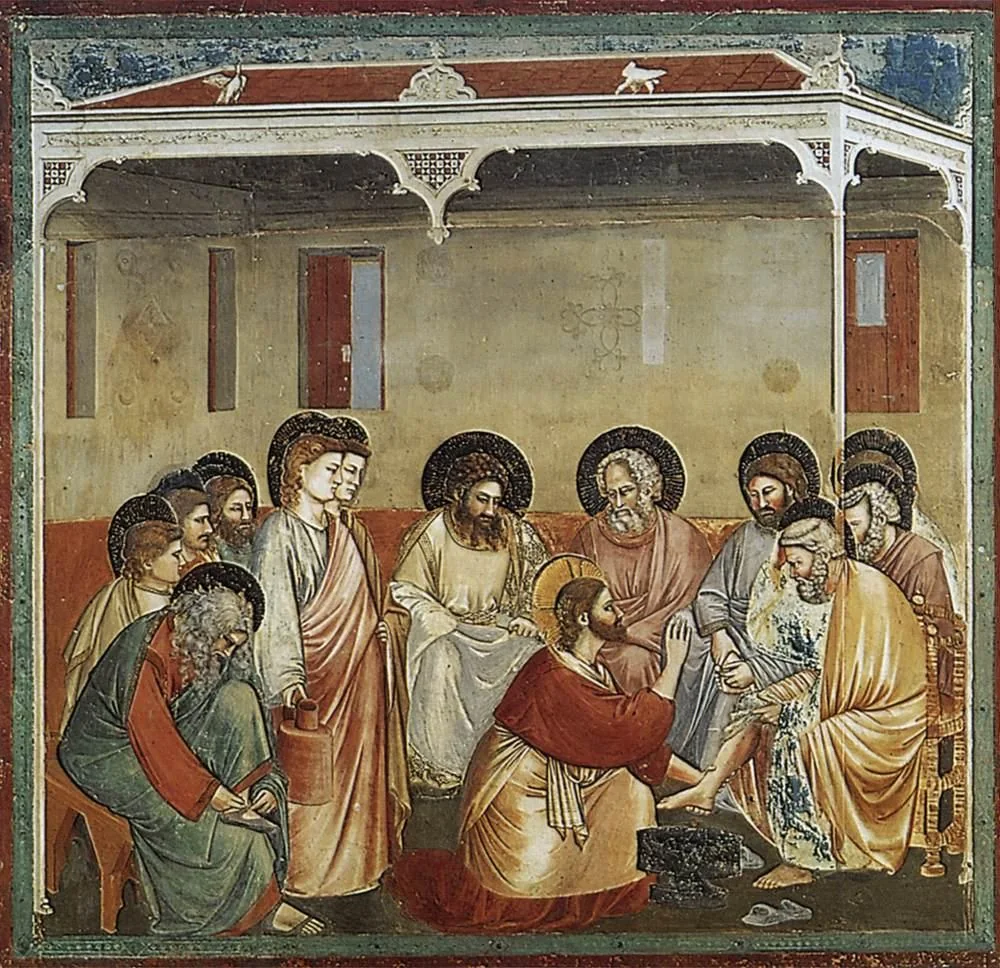
Adam, a man, reached up to be like God. Christ, “being in the form of God, did not consider it robbery to be equal with God, but made Himself of no reputation, taking the form of a bondservant” (Philippians 2:6–7). The one who was God by nature went down, and Paul tells believers to share that mind: “in lowliness of mind let each esteem others better than himself” (Philippians 2:3).
Jesus taught the same. He told His disciples to take the lowest place (Luke 14:10). He said that “the Son of Man did not come to be served, but to serve” (Mark 10:45). And when they asked who was greatest, He set a child in front of them: “whoever humbles himself as this little child is the greatest in the kingdom of heaven” (Matthew 18:4). The children of God are marked by a child’s humility, not by rank. “God resists the proud, but gives grace to the humble” (James 4:6).
| Adam reaches up | Christ comes down |
|---|---|
| A creature made in God’s imageGenesis 1:27 | In the form of GodPhilippians 2:6 |
| Offered an upgrade: “you will be like God”Genesis 3:5 | Made Himself of no reputationPhilippians 2:7 |
| Took the fruit and ateGenesis 3:6 | Took the form of a bondservantPhilippians 2:7 |
| Hid from the presence of GodGenesis 3:8 | Humbled Himself to the point of deathPhilippians 2:8 |
Like begets like
Lee was right that birth produces a family likeness. John says what it looks like: “In this the children of God and the children of the devil are manifest: Whoever does not practice righteousness is not of God, nor is he who does not love his brother” (1 John 3:10). The mark of God’s children is righteousness and love, not the height of their revelation.
A teaching that tells believers they are God in nature, that their ministry released the high peak, and that other Christians preach a low gospel does not produce that likeness. It produces pride, and a group formed around it is not spiritually healthy. Lee’s “God begets God” is not a deeper truth than the historic faith. It is a departure from it.
Scripture considered in this post
10“You are My witnesses,” says the LORD, “And My servant whom I have chosen, That you may know and believe Me, And understand that I am He. Before Me there was no God formed, Nor shall there be after Me.
God does not describe Himself as a kind that reproduces. He is the one God, and no other is formed before or after Him.
5Let this mind be in you which was also in Christ Jesus,
6who, being in the form of God, did not consider it robbery to be equal with God,
7but made Himself of no reputation, taking the form of a bondservant, and coming in the likeness of men.
8And being found in appearance as a man, He humbled Himself and became obedient to the point of death, even the death of the cross.
The one who was God by nature went down to serve. Believers are told to share that mind, not to reach upward.
1Behold what manner of love the Father has bestowed on us, that we should be called children of God! Therefore the world does not know us, because it did not know Him.
2Beloved, now we are children of God; and it has not yet been revealed what we shall be, but we know that when He is revealed, we shall be like Him, for we shall see Him as He is.
John’s conclusion from divine birth is that believers are children who will be like Him, not that they are God. Even that status is a gift of the Father’s love, not an achievement to boast in.