
Shepherding Words ↗ presents Daystar as an effort to fund full-time workers and church meeting halls. It describes Witness Lee as its nominal president and acknowledges that member investors lost most of their money. Those admissions do not establish theft or prove that the accounting records were false. They do make the ethical question unavoidable: why were church members asked to carry the risk of a commercial venture associated with their spiritual leaders?
The article explains the failure through the 1973 oil embargo, recession, and manufacturing problems. Those factors may help explain why Daystar failed. They do not answer whether the way the venture was promoted, structured, and borne was appropriate.
“most of the money invested in it was lost.”
Paul’s tentmaking makes the opposite point
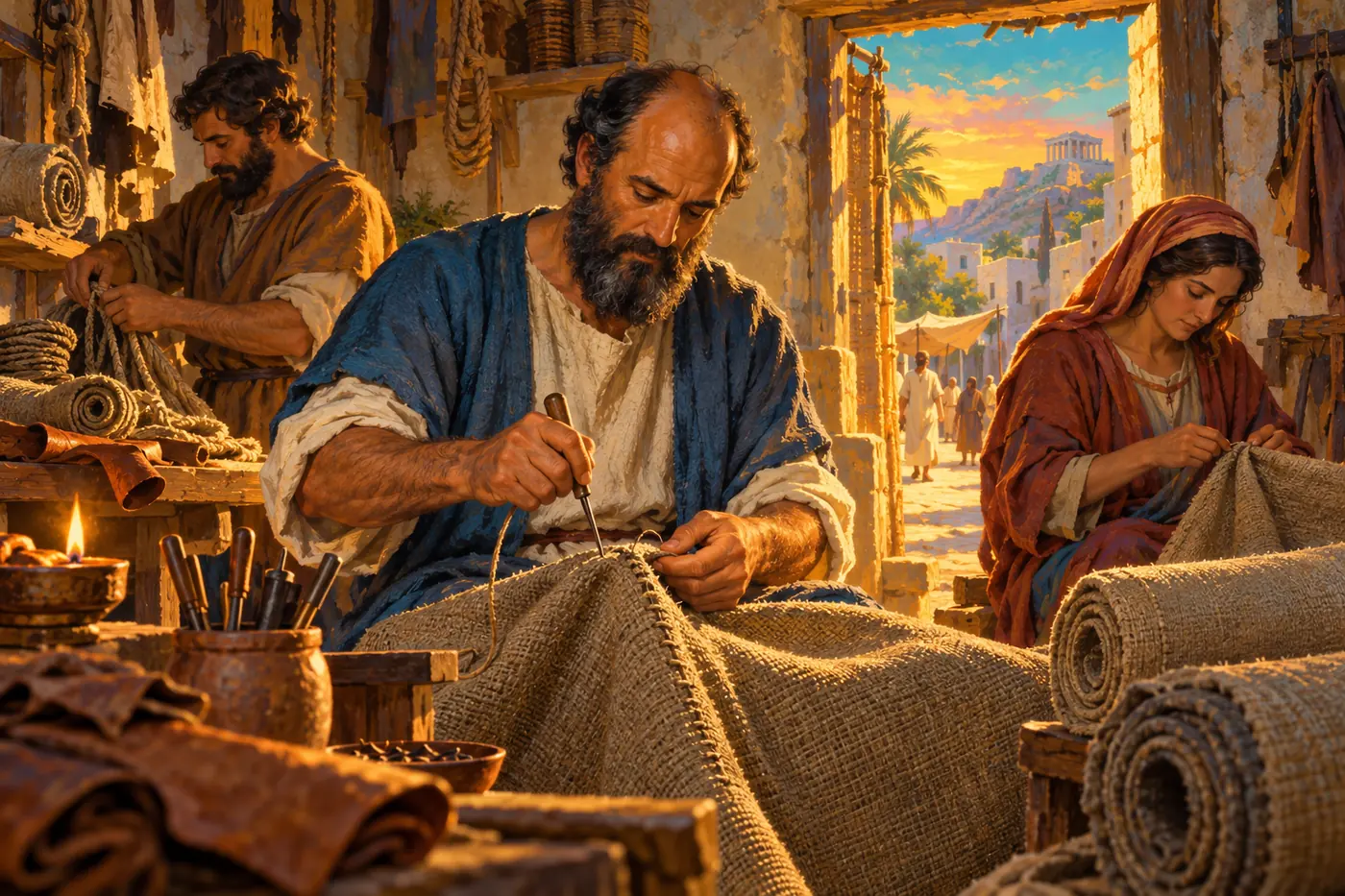
The appeal to Paul’s tentmaking misses the central reason Paul worked with his own hands. In Acts 20:33–35, 1 Thessalonians 2:9, 2 Thessalonians 3:8, and 1 Corinthians 9:12–18, Paul emphasizes that he did not want to burden believers or give anyone grounds to question his motives. His trade reduced the financial pressure his ministry placed on the churches.
Daystar did the reverse. LSM’s response confirms that local church members invested or lent money. An anonymous 1988 insider pamphlet says members were pressured to invest life savings and then urged to treat investments as donations. Other critical sources report promotion through church relationships and meetings. This was not an apostle quietly supporting himself through ordinary work. It was a speculative, high-end motor-home venture tied to OCS, Fosforus in Taiwan, and a leader who held spiritual authority over the people being asked to finance it. Federal notices show that in December 1973 Daystar filed with the SEC to register 7,500 shares of common stock, then withdrew the registration in September 1974.
“Many saints were pressured to give their life savings to this business.”
“Mr. X then asked one of his co-workers … to persuade the saints, who invested their money to consider the investment as a donation and not seek to be reimbursed.”
“About Daystar, that is not your business. No, I don’t answer you.”
Paul’s tentmaking
- Worked with his own handsActs 20:34
- “That we might not be a burden to any of you”1 Thessalonians 2:9
- Gave up even his right to support1 Corinthians 9:12
- Handled money “in the sight of men”2 Corinthians 8:21
Daystar
- Church members invested or lent moneyShepherding Words
- “Most of the money invested in it was lost”Shepherding Words
- OCS owned the factory, and Daystar owed OCSLee, 1978 call
- “About Daystar, that is not your business”Lee, 1978 call
33I have coveted no one’s silver or gold or apparel.
34Yes, you yourselves know that these hands have provided for my necessities, and for those who were with me.
35I have shown you in every way, by laboring like this, that you must support the weak. And remember the words of the Lord Jesus, that He said, “It is more blessed to give than to receive.”
Paul presents his work as a way to provide for needs and support the weak, not as a way to transfer a commercial venture’s risk to believers.
9For you remember, brethren, our labor and toil; for laboring night and day, that we might not be a burden to any of you, we preached to you the gospel of God.
Paul names the purpose plainly: not to burden the people to whom he preached.
8nor did we eat anyone’s bread free of charge, but worked with labor and toil night and day, that we might not be a burden to any of you,
Again, the work is framed as bearing one’s own cost rather than asking fellow believers to bear it.
12If others are partakers of this right over you, are we not even more? Nevertheless we have not used this right, but endure all things lest we hinder the gospel of Christ.
Even where Paul believed he had a legitimate right to support, he chose not to exercise it so the gospel would not be hindered.
Boston’s repayment was beside the point
Shepherding Words ↗ emphasizes that the church in Boston’s 1976 loan to Anaheim was repaid. If accurate, that settles a narrow question about that loan, not the wider Daystar losses. The recording suggests why Benoit called: he says his church had contributed money, references “what’s been happening” among the saints, and asks his questions “before the Lord.” Members who lost money were likely upset, and that pressure probably prompted the call, though the recording names no one specifically. A later insider pamphlet adds that some members were pressured to invest life savings and later urged to waive repayment.
Shepherding Words ↗’ emphasis on repayment also leaves the accountability contrast unaddressed. In the recorded financial conversation ↗, Lee says, “The church is the church of all the saints,” and tells Benoit, “You are responsible to show the saints how the account is kept.” He then calls the ministry “my personal ministry” and says, “I’m not responsible to anyone. I’m only responsible to the government” (1978 Phone Call Between Sal Benoit and Witness Lee). That is a striking double standard: he invokes the saints’ right to know about church accounts, then denies comparable responsibility for his own ministry.
A retrospective compilation published by Artemis Belt ↗ adds useful nuance: it says some saints wanted to sue after Daystar failed, many were asked to waive Lee’s debt, and those who insisted on repayment “typically, got paid” (A History of the Lord’s Recovery in the U.S., Part 1 ↗). That account is not a complete payment ledger, so it does not establish that every investor was repaid or that no one was pressured. It does show why the careful claim is uneven repayment and disputed accountability, not that nobody received money back.
The recorded call then leaves a real concern. Lee repeatedly says the Daystar questions are not Benoit’s business and that he has no responsibility to answer, while later confirming that OCS owned Fosforus, Fosforus manufactured Daystar motor homes, and Daystar owed OCS. The recording does not prove that Living Stream donations were diverted to Daystar: Lee explicitly denies that. But refusing to explain the relationships, while members were known to have suffered losses, creates an appearance of opacity that a spiritual leader had every reason to dispel.
Transparency and restitution are the biblical standard
2 Corinthians 8:20–21 is more directly relevant than a general appeal to appearances. When Paul handled a collection, he arranged matters to avoid blame and to provide what was honorable both before the Lord and before people. That is the model for money connected with Christian ministry: not merely technically acceptable books, but arrangements that can withstand open scrutiny.
1 Thessalonians 5:21–22 calls believers to test all things, hold fast what is good, and abstain from every form of evil. That is not a substitute for 2 Corinthians 8’s concrete standard of transparent financial stewardship. Where people have been materially wronged, repentance is not satisfied by explanation alone: Zacchaeus’ response in Luke 19:8 includes restoration.
That does not require claiming that Witness Lee personally stole money or that every Daystar loss was his legal responsibility. It means that, even if there had been no criminal act, a leader who helped bring members into a harmful ministry-linked venture should have sought clear disclosure, an independent accounting, and a serious effort to make injured members whole. The record known here does not show that response.
What the recording shows
Why the Daystar money trail raised suspicion
OCS and Phosphorus sat upstream; Daystar investors carried the U.S. sales risk.
- Church and nonprofit money
- Opaque intermediaries
- For-profit business
- Relationships Lee stated in the call
- The unresolved question Benoit raised
 Church and nonprofit money: Church in Boston
Released the disputed $100,000 loan
 Church and nonprofit money: Living Stream Ministry
Nonprofit ministry receiving donations and training income
 Opaque intermediaries: Overseas Christian Stewards
Represented by Lee and associates
Not registered, according to Lee
Factory owner and Daystar’s creditor: a position that could insulate it from Daystar’s sales losses.
 Opaque intermediaries: Phosphorus, TaiwanUpstream manufacturer
Owned by OCS, according to Lee
 For-profit business: Daystar Motor HomesPrivate, for-profit company
Witness Lee was president
Members invested and lost money
Owed OCS, according to Lee
 For-profit business: Daystar investors carried the risk
Members absorbed documented losses when the American sales venture failed.
Those who insisted on repayment were typically paid; many others were asked to waive what they were owed (Artemis Belt).
 The question Benoit pressed
Did nonprofit LSM money ultimately pay Daystar’s debts?
Why critics suspected money laundering
- Religious funds and commercial debts were connected.
- An unregistered intermediary sat between the entities.
- The same leadership network controlled the relationships.
- Lee would not give Benoit a complete accounting.
What the record does and does not show
The call documents the entities, loans, ownership, debt, and Lee’s refusal to explain the full path. It does not, by itself, prove the crime of money laundering.
LSM says Boston loaned Anaheim, was repaid in 1976, and cites a later IRS no-change review.
From our reading of the recording, the issue is not simply that the answers are incomplete. Benoit asks direct questions about the Daystar losses and the relationships among the entities. Lee says the matter is not Benoit’s business, says he has no responsibility to answer, and challenges Benoit’s standing to ask. Later in the same exchange, he confirms that OCS owned Fosforus, Fosforus manufactured Daystar motor homes, and Daystar owed OCS. Those are observable features of the call, not a diagnosis of Lee’s motives.
The recording does not establish that Living Stream donations were diverted to Daystar: Lee expressly denies that, and the call provides no ledgers proving it. It does, in our view, show a refusal of transparent accountability when a fellow elder asked about losses borne by ordinary members. The money relationships were interwoven, the investors’ losses were real, and the person best positioned to clarify the structure would not give Benoit a direct explanation.
The New Testament does not reduce a leader’s accountability to civil regulation. Paul’s standard for handling ministry money was to provide what was honorable before both the Lord and people (2 Corinthians 8:20–21). The people who had been asked to finance a church-connected venture had a moral claim to clear answers, and, where harm occurred, a serious effort toward restoration.
“I’m not responsible to anyone. I’m only responsible to the government.”
Daystar fits a longer pattern of unanswered stewardship questions
Daystar should not be treated as an isolated mistake simply because the available accounts differ in kind. A 1990 insider retrospective describes a Taiwan financial crisis around 1959; the recorded Daystar call concerns losses in the 1970s; and a later Linkou land project involved North American fundraising after a permit was denied. These sources do not prove a single scheme, and the Taiwan and Linkou claims below are not audit findings. Together, however, they show that similar questions about funds, related work, and accountability arose more than once over several decades.
The pattern matters because each episode raises the same practical question: when offerings or investments connected with the work were lost, blocked, or disputed, were contributors given a clear accounting and a path to restitution? The Linkou purchase and failed permit are acknowledged in Witness Lee’s own published teaching. The reported disposition of the collected funds comes from an insider account and remains disputed; it is included here as an allegation requiring an answer, not as an established financial conclusion.
“Around 1959, Lee’s private mishandling of finances caused the first financial crisis. The work funds the saints had offered were lost, and a large debt remained.”
“We have bought more than twenty-four acres of land in Linkou, and we hope to be able to build a large meeting hall, but our application for the building permit was not approved.”
“The funds collected by Living Stream for Linkou were neither forwarded to the church in Taipei nor returned to the contributing churches.”
Scripture considered in this post
20avoiding this: that anyone should blame us in this lavish gift which is administered by us—
21providing honorable things, not only in the sight of the Lord, but also in the sight of men.
Paul’s concern was not only that the collection be handled rightly before God, but that its handling be visibly honorable before people.
21Test all things; hold fast what is good.
22Abstain from every form of evil.
The passage calls for testing what is claimed and holding fast what is good; it is not a substitute for transparent stewardship.
8Then Zacchaeus stood and said to the Lord, “Look, Lord, I give half of my goods to the poor; and if I have taken anything from anyone by false accusation, I restore fourfold.”
Zacchaeus’ response illustrates the practical direction of repentance where someone has been materially wronged: restoration, not explanation alone.